Sound familiar?London
- The call
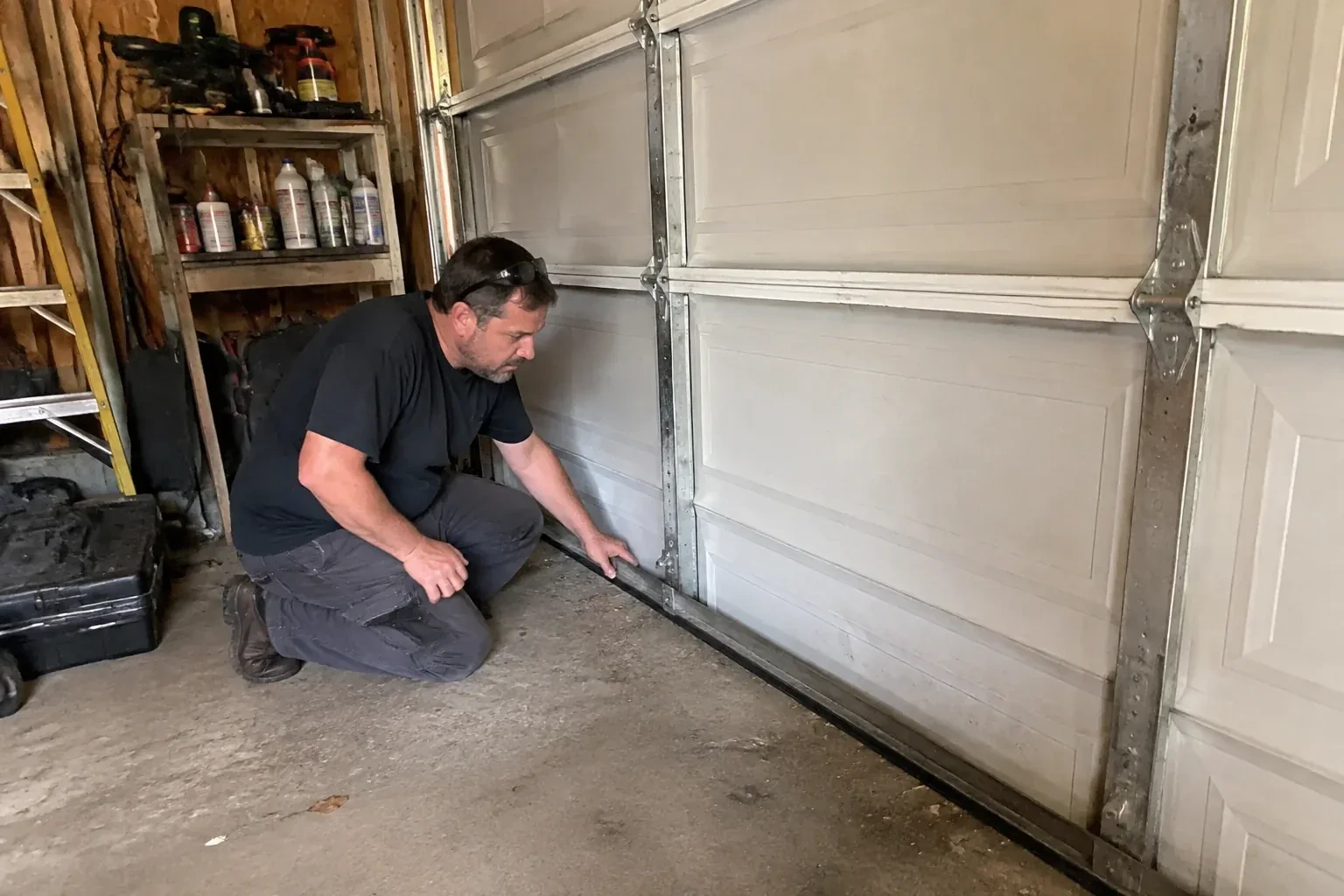
- Standing inside with the door closed, you notice the cable on the right side near the floor has gone fuzzy. A handful of broken wires stick out like a bottle brush and the steel underneath is brown.
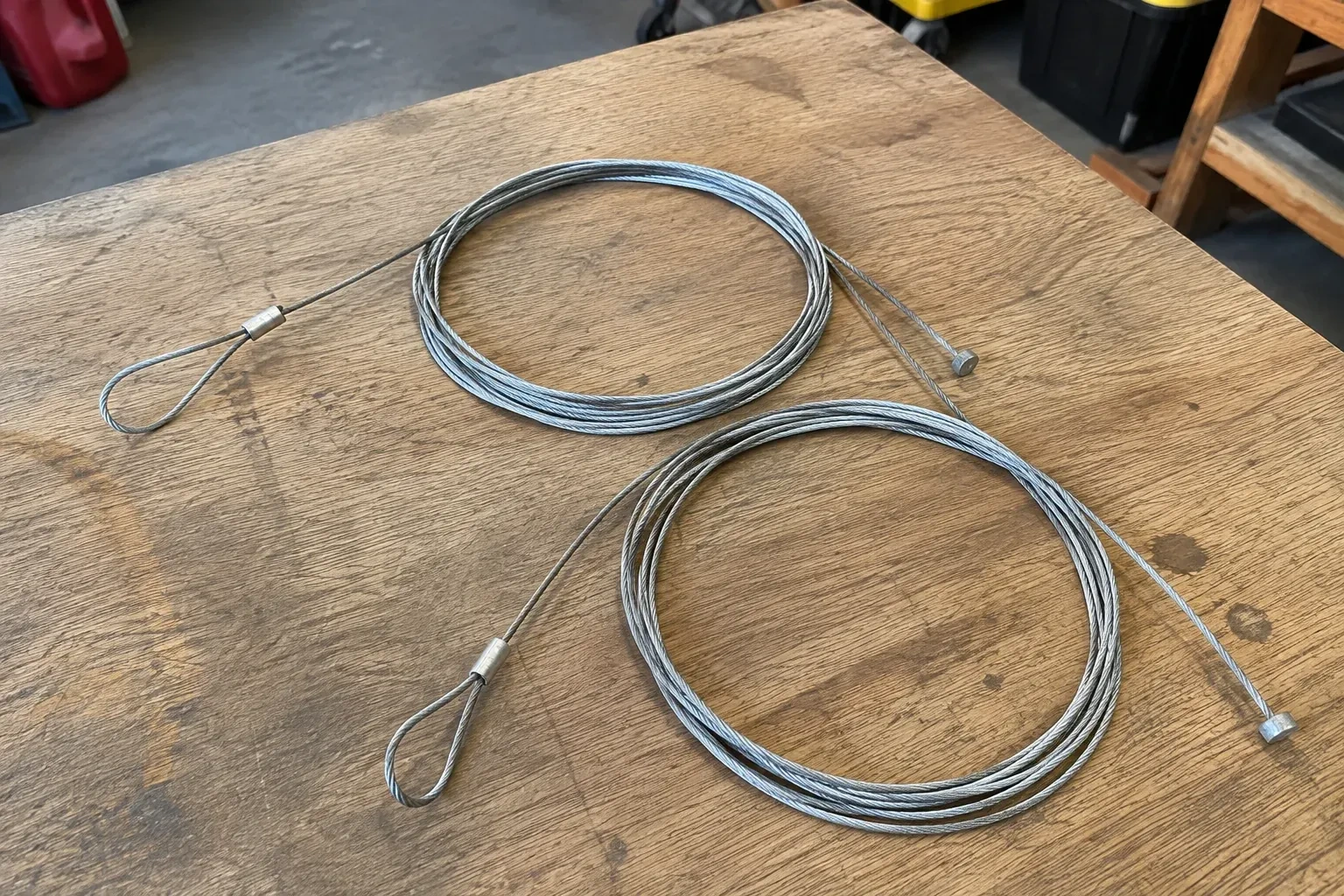
A cable visit runs in a set order. First the opener is disconnected and the door clamped so nothing can move. Then the counterbalance is unloaded so the drums, cables and bottom brackets can be handled calmly. The old cables come off, the drums and brackets are inspected, and new cables of the correct specification go on. Both sides are tensioned evenly until the door sits level, then the springs are wound back to the turns the door height calls for. Finally the door is balanced by hand, the opener reconnected and its travel and reversing checked. You are shown the finished door working before the technician leaves.
Sound familiar?London
Garage Door Cable Replacement · London
Scene 1
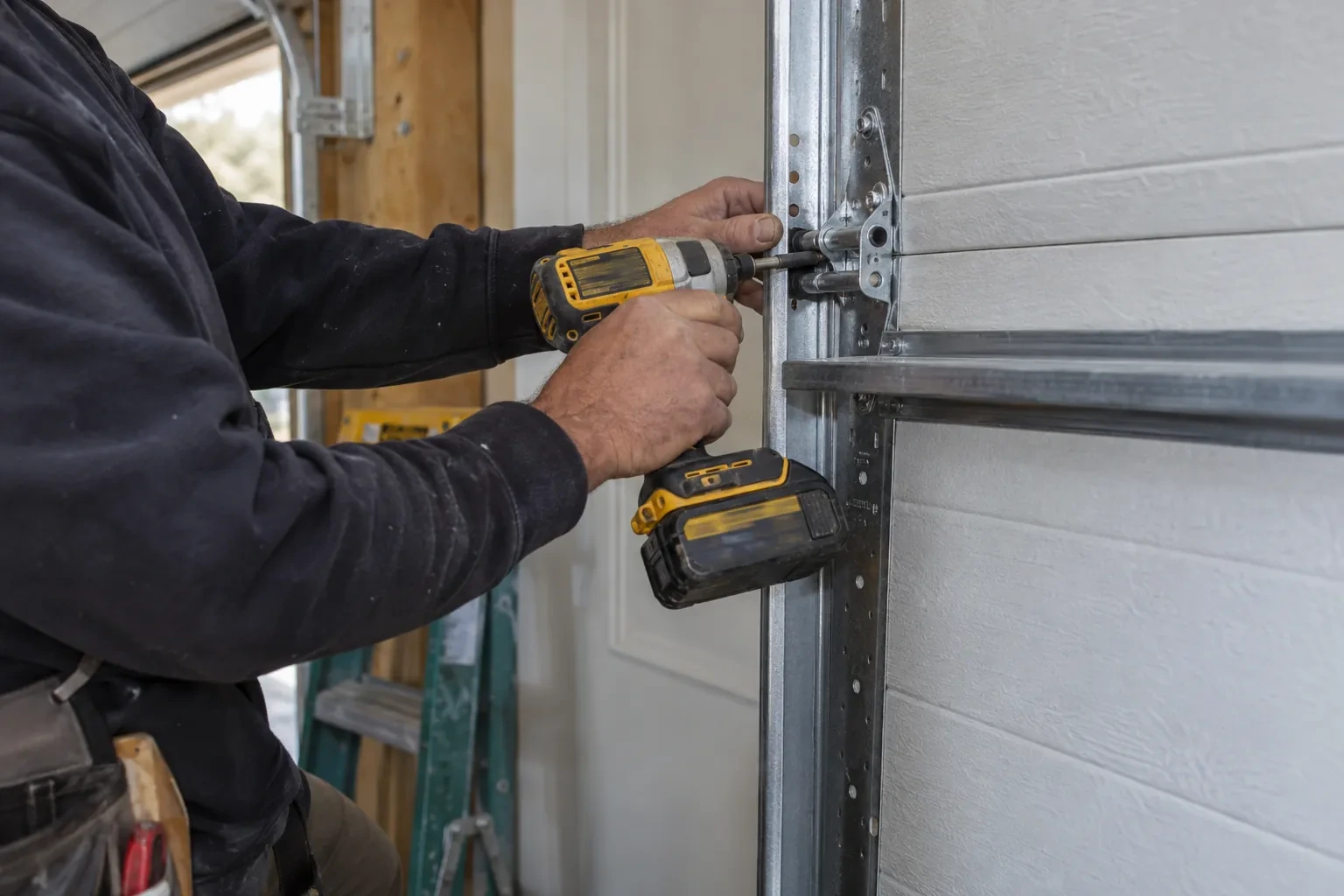
The bottom bracket in each corner anchors the cable and carries the bottom roller, and it lives in the wettest, saltiest spot on the door. The technician looks for bending from an impact, corrosion around the cable pin and the fasteners into the section, and a roller that has seized or lost its stem bearing. On many doors these brackets have tamper-resistant fasteners because they are under load whenever the springs are tensioned, so they are inspected as found and only removed once the counterbalance is unloaded. A bracket that is bent or rusted through is scheduled for replacement in the same visit so the new cable has a sound anchor.
Scene 2
With the springs wound and the clamps off, the technician lifts the door by hand. It should rise with light effort, hold still at roughly waist height, and settle to the floor without slamming; that is the balance test, and the spring turns are adjusted until it passes. The door is run through several full cycles by hand while the cables are watched on the drums. Then the opener is reconnected, its travel limits and force settings are checked against the newly balanced door, and the reversing test with a block under the door and the photo-eye test are carried out. You see each of these done.
Scene 3
The first thing you notice is a door that rises squarely, with both bottom corners leaving the floor together and the top section staying flat as it turns into the horizontal track. The bottom seal meets the slab along its whole length, so the draft and the strip of daylight at one corner are gone. The opener sounds calmer, because it is moving a balanced door rather than dragging a crooked one, and it stops reversing for no apparent reason. If you lift the door by hand with the opener released, it moves with light effort and holds where you leave it. That is what a correctly cabled door feels like.
What shapes the quoteBroughdale Garage Door Specialists
FeesSame any hour
The drum is the grooved wheel on each end of the torsion shaft that the cable winds onto as the door opens. Its grooves guide the cable in a single layer and its shape sets how the door is balanced through its travel. A drum is replaced when the grooves are worn or cracked, the cable slot is damaged, or it has spun on the shaft and scored it. Drums are changed in pairs.
Yes, and both cause trouble. A cable that is too long runs out of drum groove and starts a second layer over the first, which wears it and throws the balance off near the top of travel. A cable that is too short leaves the door hanging out of level or the drum without a secure wrap. The correct length comes from the door height, the drum and the lift type, so the technician measures rather than guesses.
The opener is disconnected and the door clamped. The technician identifies the counterbalance type, inspects both cables, the drums, brackets, rollers, track and springs, and explains what is found. The springs are unloaded, the old cables removed, new ones fitted and set so the door is level, and the springs wound back. The door is then balanced by hand, the opener reconnected and its safety features tested while you watch.
MiddlesexOntario
Garage Door Cable Replacement · Lucan Biddulph, Middlesex Centre, Broughdale, Calamity Corners, Masonville, Orchard Park, Sherwood Forest, Stoneybrook, University Heights, White Hills, Northcrest
Every square is one home in a hundred.
On-site assessment
There was a sharp crack from the garage, and when you went to look the door had dropped on one side and jammed.
(226) 781-8703, open 24/7.
On-site assessment preferred · (226) 781-8703, open 24/7