Skip to content
BroughdaleGarage Door SpecialistsOpen 24/7 (226) 781-8703
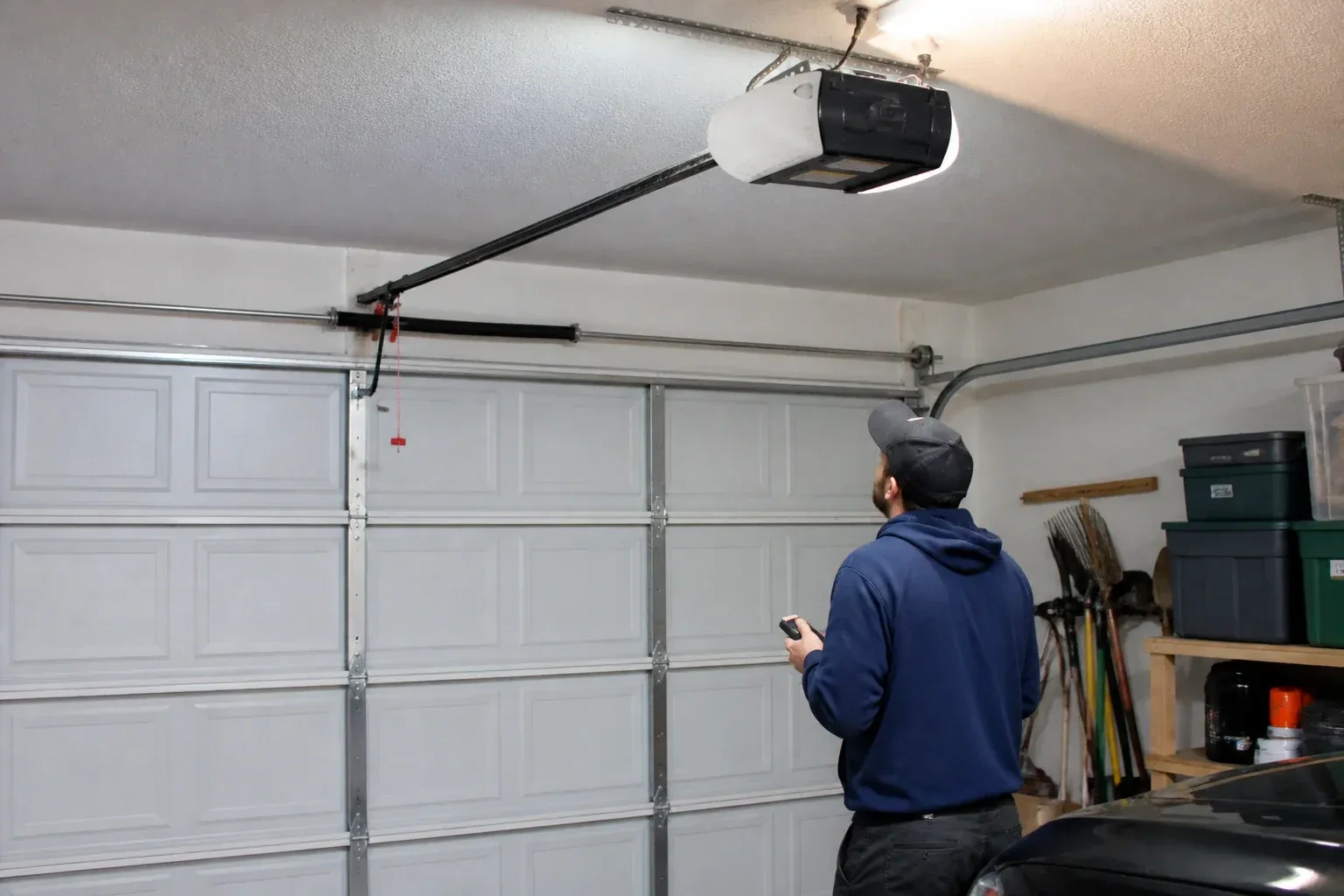
A person holding a remote looks toward an overhead garage-door opener and rail. — Garage Door Opener Diagnosis and Repair, London

Openers · London

Garage Door Opener Diagnosis and Repair

The door goes up perfectly. Coming down is the trouble: partway to the floor it stops, climbs back to the top, and the light on the opener blinks at you.

In plain words

What you get from the visit is more than a working door. You get told, in plain words, what was wrong and why it happened: a gear that had run dry for years, a sensor knocked out of line by a snow shovel, a wall control left in lock mode by a visiting grandchild. Small repairs are done on the spot, settings are recorded, and the door is demonstrated on every control you own. You also learn the short monthly test that catches most opener problems before they strand a car, so the next fault is one you notice while it is still small.

Sound familiar?London

The call
The door goes up perfectly. Coming down is the trouble: partway to the floor it stops, climbs back to the top, and the light on the opener blinks at you. The only way to close it is to stand inside holding the wall button the whole way down.
NextHow the visit goes

Garage Door Opener Diagnosis and Repair · London

How the visit goes

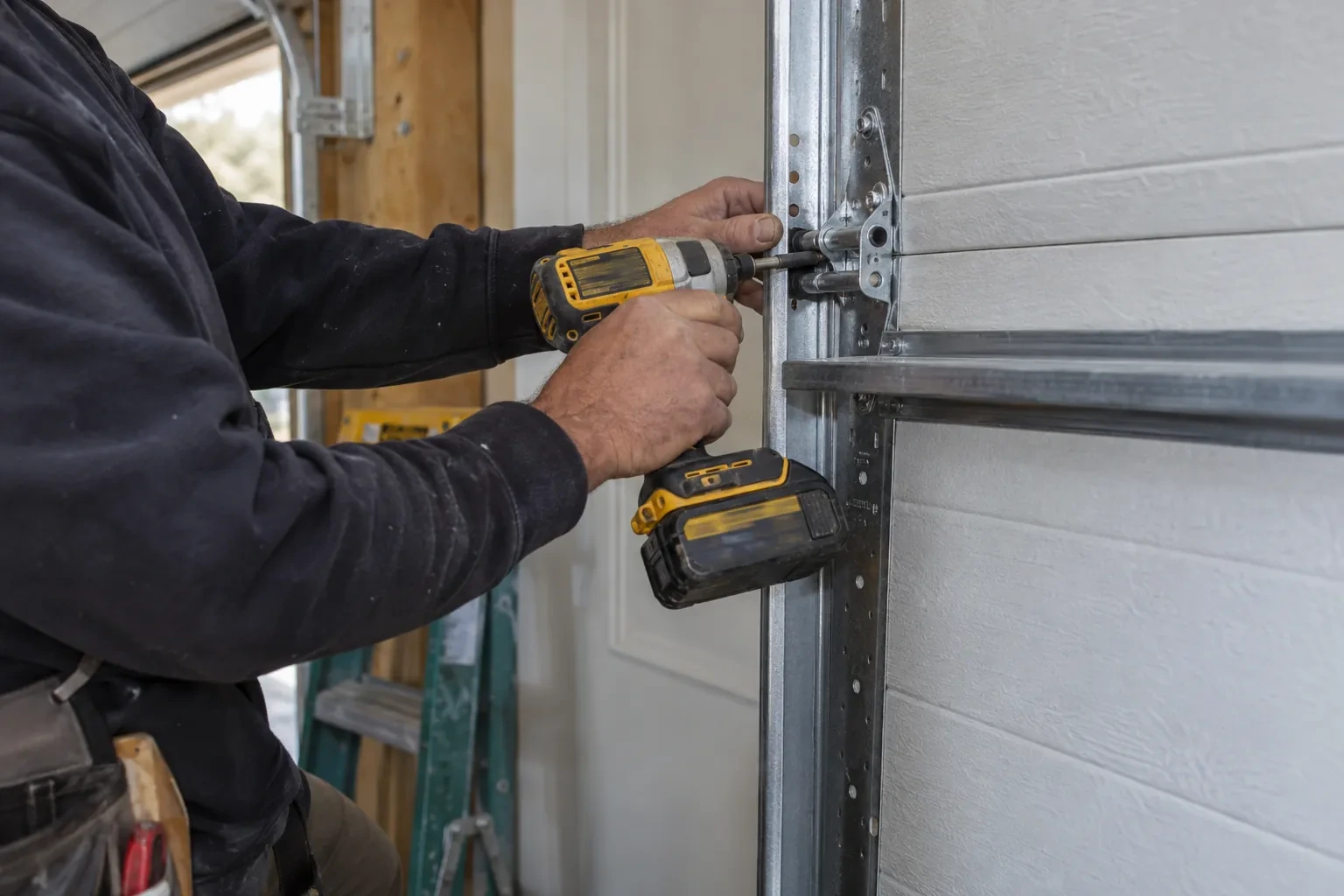
Hands driving a screw with a yellow cordless impact driver into a perforated steel track beside a white garage door panel.
  1. Scene 1

    The two small eyes near the floor

    The photo-eye sensors are inspected together with their wiring. Each sensor carries a small indicator; a steady light on both means the beam is aligned, while a flicker, a dark light or one that goes out when the bracket is nudged points to misalignment, a loose mount or a damaged wire. The technician sights along the beam, looks for obstructions, cobwebs, frost and low sun on the receiving lens, checks that the sensors sit no higher than about fifteen centimetres off the floor, and traces the wire back to the head unit for staples, kinks and chew marks. Sensor faults are the single commonest reason a door refuses to close.

  2. Scene 2

    Setting travel and force, then proving them

    Once the mechanical cause is dealt with, the opener is set up as if newly installed. Travel is adjusted so the door seals gently on the floor without hammering the slab and stops at the top clear of the header. Force is set as low as will reliably move the door through a full cycle in the current season, never higher. Then the door is closed onto a 2x4 lying flat on the floor and must climb back to open the moment it touches; and while closing again, a broom handle is passed through the beam and the door must stop and rise. Failing either means the setup is redone, not accepted.

  3. Scene 3

    A record you can keep

    You receive a plain account of the visit: the model and serial of the opener, what the symptom turned out to be, which parts were replaced, what the travel and force settings are now, and anything noticed for the future, such as rollers approaching the end of their life or a spring nearing its cycle count. Keep this with the house papers. It makes a later service call shorter, it tells a buyer the door has been looked after, and it gives you the model number ready when a remote needs replacing or a code needs looking up.

In the van

  • Logic board or receiver
  • Travel limit switch or RPM sensor
  • Remote batteries (coin and cylinder cells)
  • Trolley and carriage
  • Bell wire and clips

What shapes the quoteBroughdale Garage Door Specialists

Sensor realignment versus replacement
Straightening a bracket and cleaning a lens is a small task. Replacing the sensor pair and running new wire along the wall and ceiling is a larger one, and the quote names which applies.
Which component failed
A capacitor, a sensor pair or a re-engaged trolley sits at one end of the range; a logic board or a motor sits at the other. The diagnosis names the part before the quote is settled.
Type of drive
Chain, belt, screw, direct-drive and wall-mounted jackshaft openers each have their own parts and their own labour; a gear kit on a chain unit is a different job from a coupler on a screw drive.

FeesSame any hour

Have it ready

Before you call · 0 / 3

(226) 781-8703

Homeowners ask

What do the blinking lights on the opener mean?

They are a diagnostic code. On openers made in roughly the past fifteen years, the head unit flashes its lights, or a pair of up and down arrows, in a counted pattern such as one flash then five. Each pattern corresponds to a fault family on the maker's chart for that model: sensor circuit obstructed or open, motor commanded but not moving, more force than allowed. The technician reads the pattern, then confirms it by hand, since one fault can imitate another.

The wall button works but none of my remotes do. What happened?

Three things account for most of these. The wall control has been put into lock mode, sometimes by a child or a visitor, which blocks all remotes until it is released. The opener's memory was cleared, usually by someone pressing the learn button while trying to program a new remote, so every remote needs programming again. Or the receiver in the head unit has failed. The first two are simple settings; the third is a part.

The door is stuck shut and my car is inside. How do you get in?

Through the house if the garage connects to it, or through a side door. Many doors also have an outside keyed emergency release, a small keyed cylinder that pulls the trolley free so the door lifts by hand from outside. If yours does not have one, the technician can fit a keyed release kit as part of the visit so there is a safe way in next time; until then, an alternate entrance is used and the diagnosis proceeds once inside.

Londoninformation

MiddlesexOntario

Town
London, Middlesex
In business
31 years
Hours
Open 24/7
Nights, weekends and holidays, same fees
Visits
On-site assessment preferred. Request a visit or call.

2021 census: what it means at the door

Every square is one home in a hundred.

  • 52 in 100 homes · older homes
  • About 52% of homes in London were built in 1980 or earlier, according to the 2021 Census.Original openers in older neighbourhoods often predate photo-eye sensors and rolling-code remotes. Bringing one up to date means a quieter motor, sensors that stop the door for a child or pet, and remotes that cannot be copied from the driveway, all installed in a single visit.
  • Single-detached houses make up about 49% of homes in London (2021 Census).In mixed neighbourhoods, noise matters differently from one address to the next. A detached house with a bedroom above the garage and a townhouse with a neighbour through the wall both benefit from a belt-drive opener and nylon rollers, and we explain the difference either way.

Source: Statistics Canada, Census Profile

Open London in Google Maps

On-site assessment

Request a visit.

The door goes up perfectly.

(226) 781-8703, open 24/7.