Skip to content
BroughdaleGarage Door SpecialistsOpen 24/7 (226) 781-8703
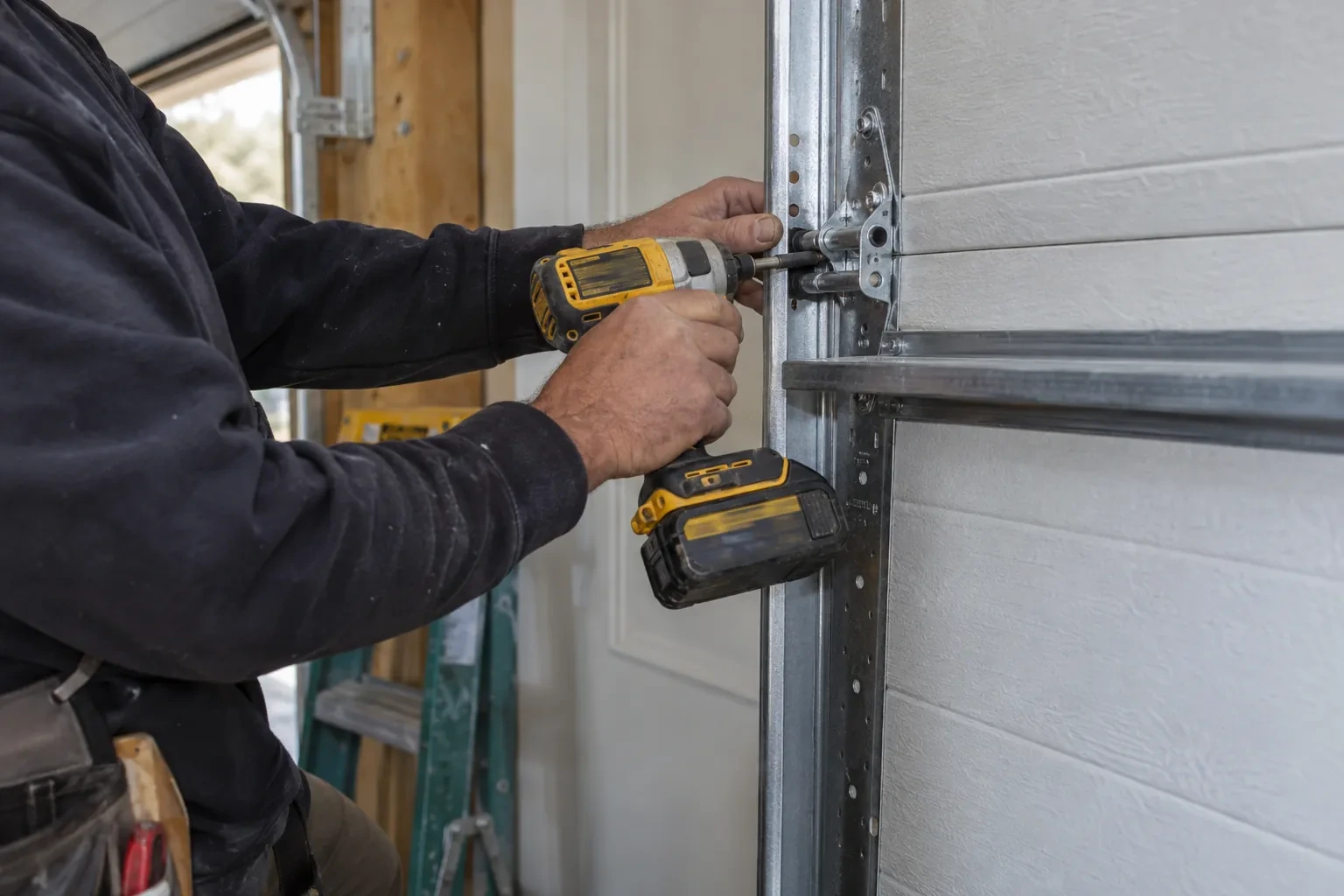
Hands driving a screw with a yellow cordless impact driver into a perforated steel track beside a white garage door panel.

Openers · London

Emergency Release Repair

The power went out in the middle of an ice storm, the car is inside, and when you reach up for the red handle there is nothing there. A frayed stub of cord hangs from the trolley, well above your fingertips, and the door sits shut.

In plain words

The visit runs in a fixed order. On the phone you describe what the release did, where the door was, and what kind of opener hangs from the ceiling. On site the door is closed or safely supported before anything else. The release assembly is inspected from handle to trolley, the door is disconnected and lifted by hand to check its balance, and the failed part is replaced with one that fits the model. The handle is set to the right height, the trolley is reconnected with the door closed, and the opener runs full cycles and both reversal tests. It ends with a demonstration on your own door.

Sound familiar?London

The call
Your garage is detached and has no side door. The remote is dead, the keypad is dead, and the small round lock in the top panel is meant to be your way in. The key goes in and turns, but nothing on the other side lets go.
NextHow the visit goes

Emergency Release Repair · London

How the visit goes

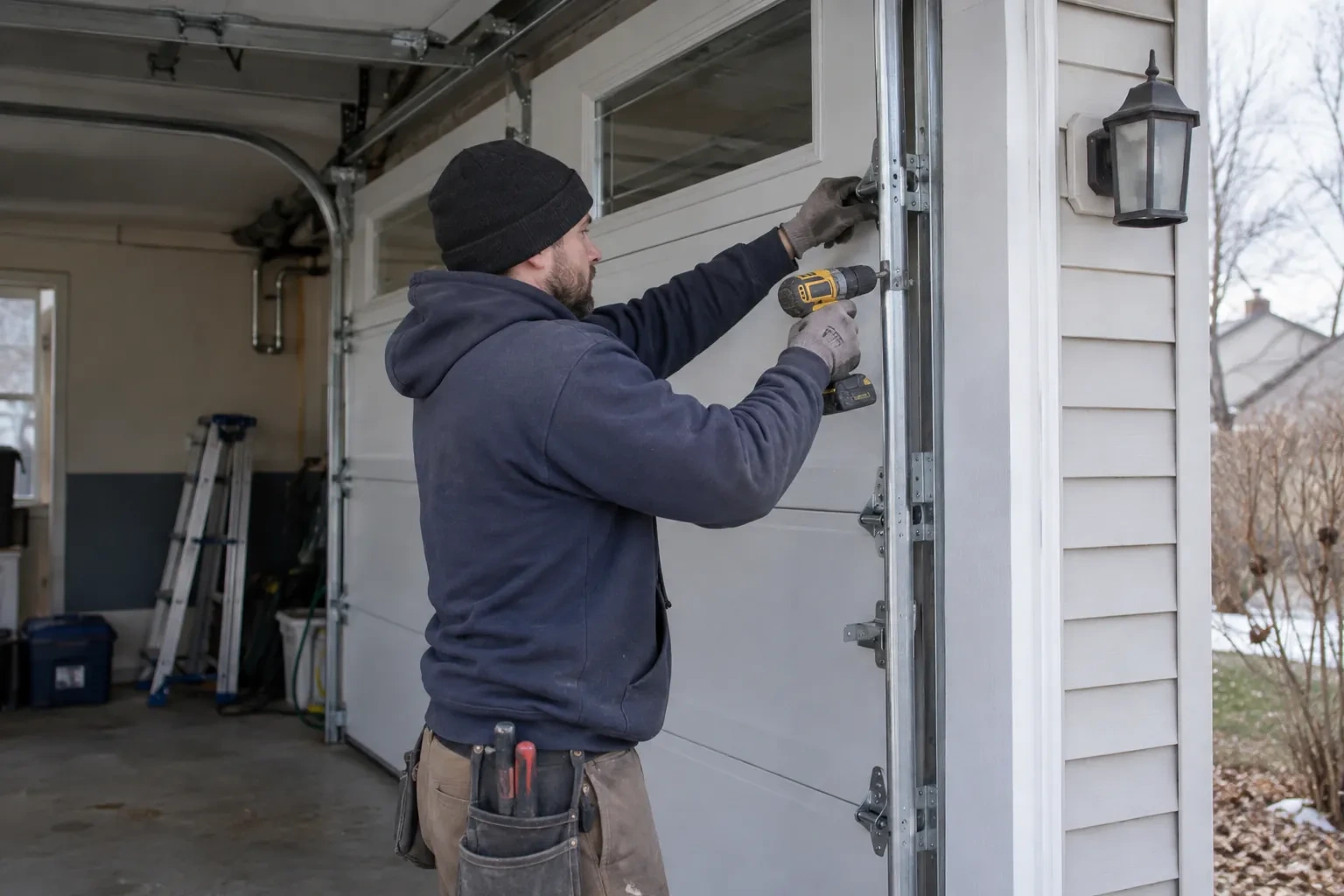
Technician in a black beanie fastening a hinge plate to a white door with small windows using a yellow cordless drill.
  1. Scene 1

    Door closed before anything is touched

    The first thing the technician does is get the door into a safe state. If it is closed, it stays closed while the release is examined. If it is stranded open or part-way, the door is supported and clamped, with the opener unplugged, before anyone reaches for the lever, because a door that is free of its opener is held only by its springs and an unbalanced one can move on its own. This is the same rule the industry checklist gives homeowners: disconnect with the door closed and keep the opening clear, since even a closed door can shift once free of the opener. Starting here keeps the risk low until someone decides to move the door.

  2. Scene 2

    Freeing a trolley from the stop bolt

    A trolley jammed against the stop at the end of the rail is freed rather than forced. The release is pulled so the door is out of the picture, the chain or belt tension nut is backed off a few turns to give the trolley room, and the motor is run so the trolley walks away from the stop. The travel limit that let it run too far is then adjusted, the chain or belt is re-tensioned to the sag the maker specifies for that rail, and the trolley is reconnected. Because the limits were touched, the door is cycled and the reversal tests are repeated before the job is called done.

  3. Scene 3

    Battery backup and outage-prone streets

    If your street loses power a few times each winter, the technician may raise battery backup. Modern openers can carry a battery that opens and closes the door on stored power, which spares you the release altogether in most outages. The battery is a wearing part, generally replaced every few years, and the head unit signals when it is tired. The release remains the fallback when the battery is flat or the opener itself has failed, which is why both are kept in working order. You leave knowing which of the two your household relies on and how each one is checked.

In the van

  • Outside key release kit (lock, cable, keys)
  • Trolley and carriage assembly
  • Door arm, clevis pins and clips
  • 2x4 offcut for the reversal test
  • Garage door lubricant

What shapes the quoteBroughdale Garage Door Specialists

Extra keys and a lockbox
Two keys come with an outside release. Additional keys cut for family members, or a small lockbox for the spare, are small add-ons listed as separate lines.
Ceiling height and access
A standard garage puts the trolley in easy reach from a step ladder. High ceilings, a storage loft, a high-lift track or a car that cannot be moved add setup time.
Outside key release: repair or new
Renewing a cylinder, cable or keys on an existing outside release is one line; cutting the door and fitting a complete kit where none exists is another, and both are named separately.

FeesSame any hour

Have it ready

Before you call · 0 / 3

(226) 781-8703

Homeowners ask

How high should the release handle hang?

No more than about 1.8 metres above the floor, so an adult standing on the slab can reach it, and high enough to clear the roof of the car parked beneath it. It should also be plainly visible and red. If a new door or a rail change left the cord short, or a previous owner tied it up around the rail, the technician cuts a fresh rope to the right length and moves any obstruction out of the way.

What is an outside key release, and should I add one?

It is a keyed cylinder, mounted through the top section on a sectional door or at mid-height on others, with a cable running back to the trolley lever. Turn the key, pull the cylinder, and the door is free to lift from the driveway. It earns its place on any garage where the overhead door is the only way in, especially a detached garage. It can be fitted during the same visit, with two keys, once the door and opener are checked for a compatible kit.

I pulled the release and the door was very heavy. Is the release broken?

The release did its job; the weight is the door telling you its springs are no longer carrying it. A balanced door lifts with modest effort and holds still at about a metre. A heavy one needs the counterbalance looked at, which is work with winding bars for a technician trained for tensioned hardware. During the visit the door side is corrected first, then the release is put back into use on a door that lifts as it should.

Londoninformation

MiddlesexOntario

Town
London, Middlesex
In business
31 years
Hours
Open 24/7
Nights, weekends and holidays, same fees
Visits
On-site assessment preferred. Request a visit or call.

2021 census: what it means at the door

Every square is one home in a hundred.

  • 52 in 100 homes · older homes
  • About 52% of homes in London were built in 1980 or earlier, according to the 2021 Census.Original openers in older neighbourhoods often predate photo-eye sensors and rolling-code remotes. Bringing one up to date means a quieter motor, sensors that stop the door for a child or pet, and remotes that cannot be copied from the driveway, all installed in a single visit.
  • Single-detached houses make up about 49% of homes in London (2021 Census).In mixed neighbourhoods, noise matters differently from one address to the next. A detached house with a bedroom above the garage and a townhouse with a neighbour through the wall both benefit from a belt-drive opener and nylon rollers, and we explain the difference either way.

Source: Statistics Canada, Census Profile

Open London in Google Maps

On-site assessment

Request a visit.

The power went out in the middle of an ice storm, the car is inside, and when you reach up for the red handle there is nothing there.

(226) 781-8703, open 24/7.