Broughdale Garage Door SpecialistsBulletin 3 of 3London, Ontario
High-Lift Garage Door Conversion: inside the visit
The opener deserves as much attention as the track.
The opener deserves as much attention as the track. A common rail-mounted unit occupies the centre of the ceiling and may conflict with both a high-lift path and the space being created. The assessment therefore checks whether the existing operator suits the new geometry or whether another compatible arrangement is needed. Controls, limits and protective devices are then set for the finished travel. Treating operator placement as part of the design keeps the new overhead clearance usable rather than replacing one obstruction with another.
Start with the space you want to use
The first measurement is not the ceiling height; it is the clear zone the finished garage needs. For a vehicle lift, that includes the raised platform, the tallest expected vehicle and working clearance. For a shop, it may be lighting, storage or equipment. The technician marks that target, then compares it with the open door's present lowest point. This outcome-first approach reveals how much extra lift is useful and keeps the layout centred on a real purpose instead of simply placing track as high as the room appears to allow.
Raise and support the horizontal tracks
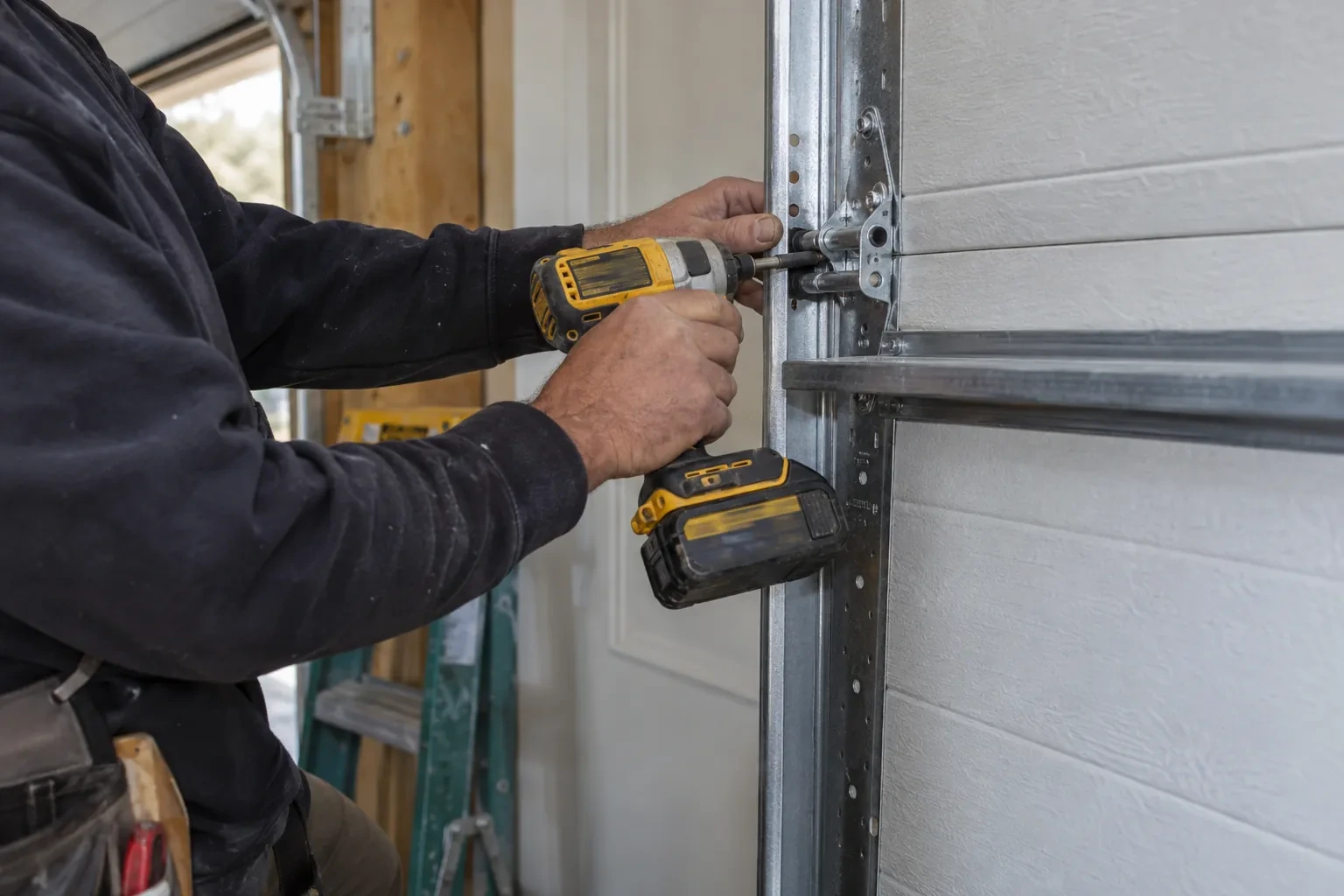
The horizontal assemblies are installed at their new elevation after the vertical and transition pieces establish the turning point. Back hangs connect the tracks to appropriate overhead support and are braced to control side movement. Levels and reference lines keep the pair parallel while clearance is checked around beams, lights and planned equipment. The tracks must support the door when open without crowding rollers or flexing under normal movement. This stage turns previously unused upper volume into the resting area for the raised panels.
Simple signs that invite a service check
The handover gives you a reference for normal operation: level travel, consistent cable winding, rollers centred in track and a smooth transition from vertical to horizontal. Arrange a check if the door begins leaning, a cable looks slack or frayed, a roller approaches a track edge, or the operator repeatedly changes sound. Leaving the door in a stable position and keeping the area clear supports an orderly visit. Early observation helps a technician focus on the changed component while the documented conversion remains easy to trace.