Sound familiar?London
- The call
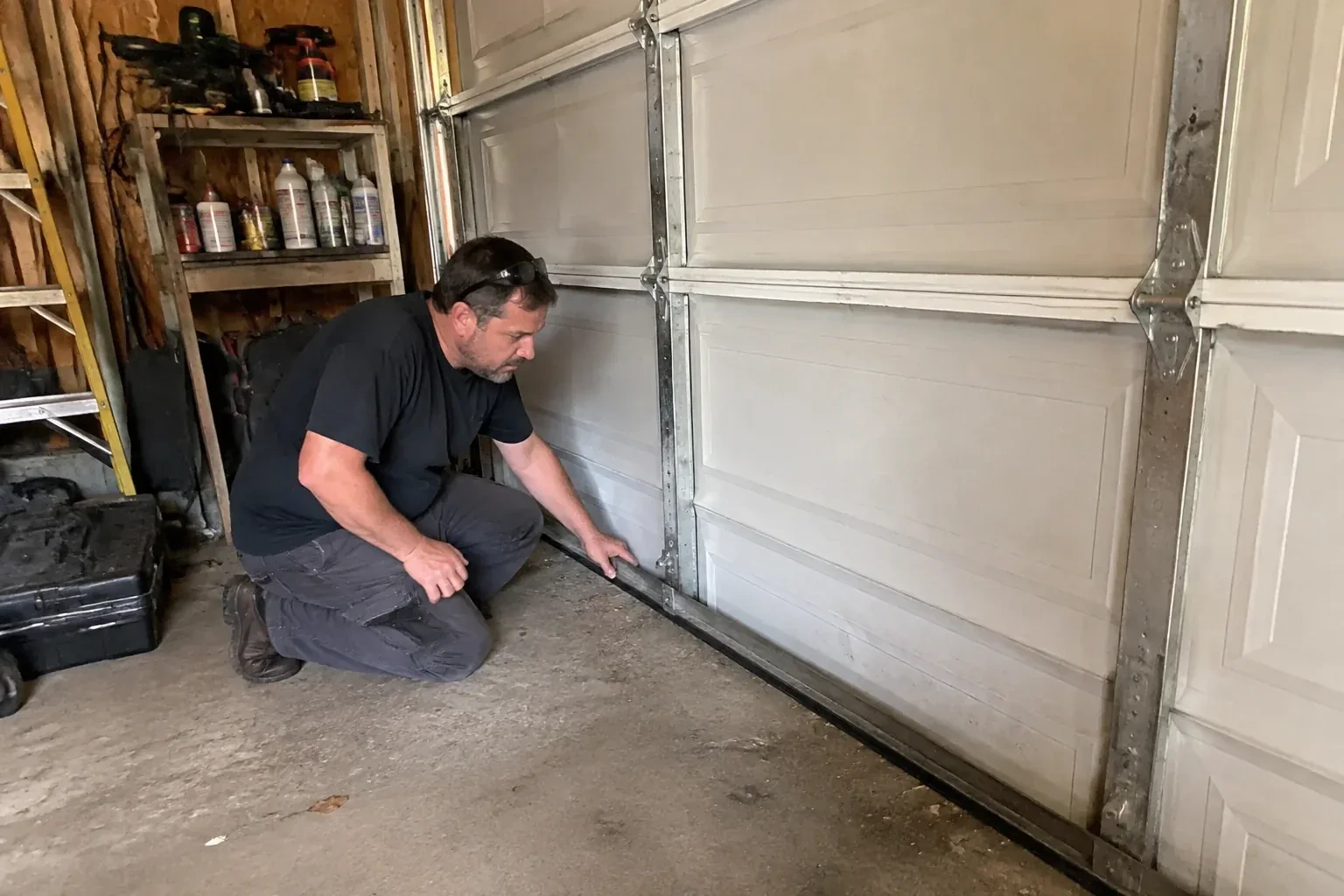
- Halfway up, the door lurches and one roller rides onto the lip of the channel. Near the curve the track looks wider than the rest, and the door hesitates in the same place on the way down.
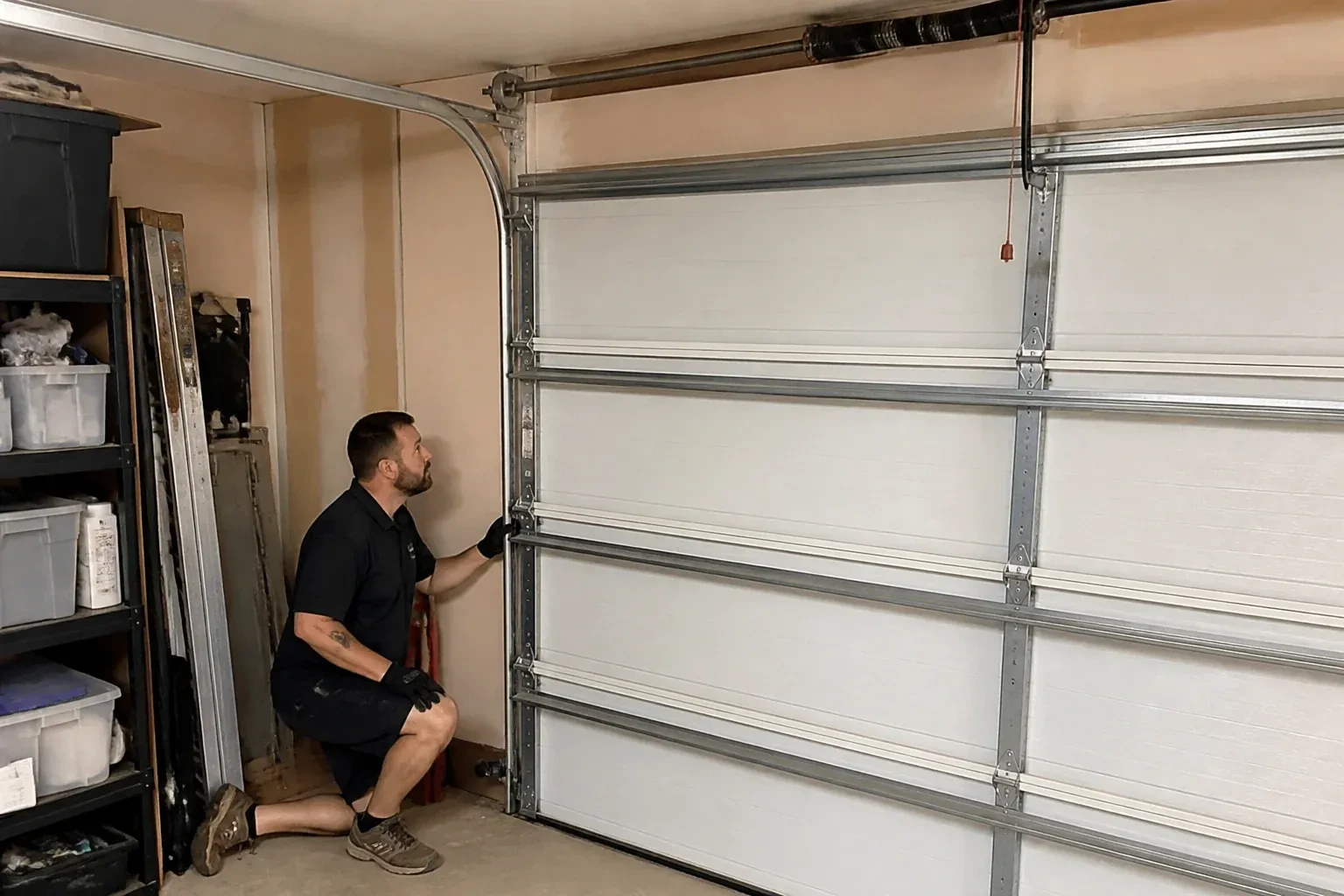
You bought the house with a door that sticks near the top of its travel. The vertical track was screwed tight against the jamb, so the door drags along its stop moulding on every trip instead of swinging clear.
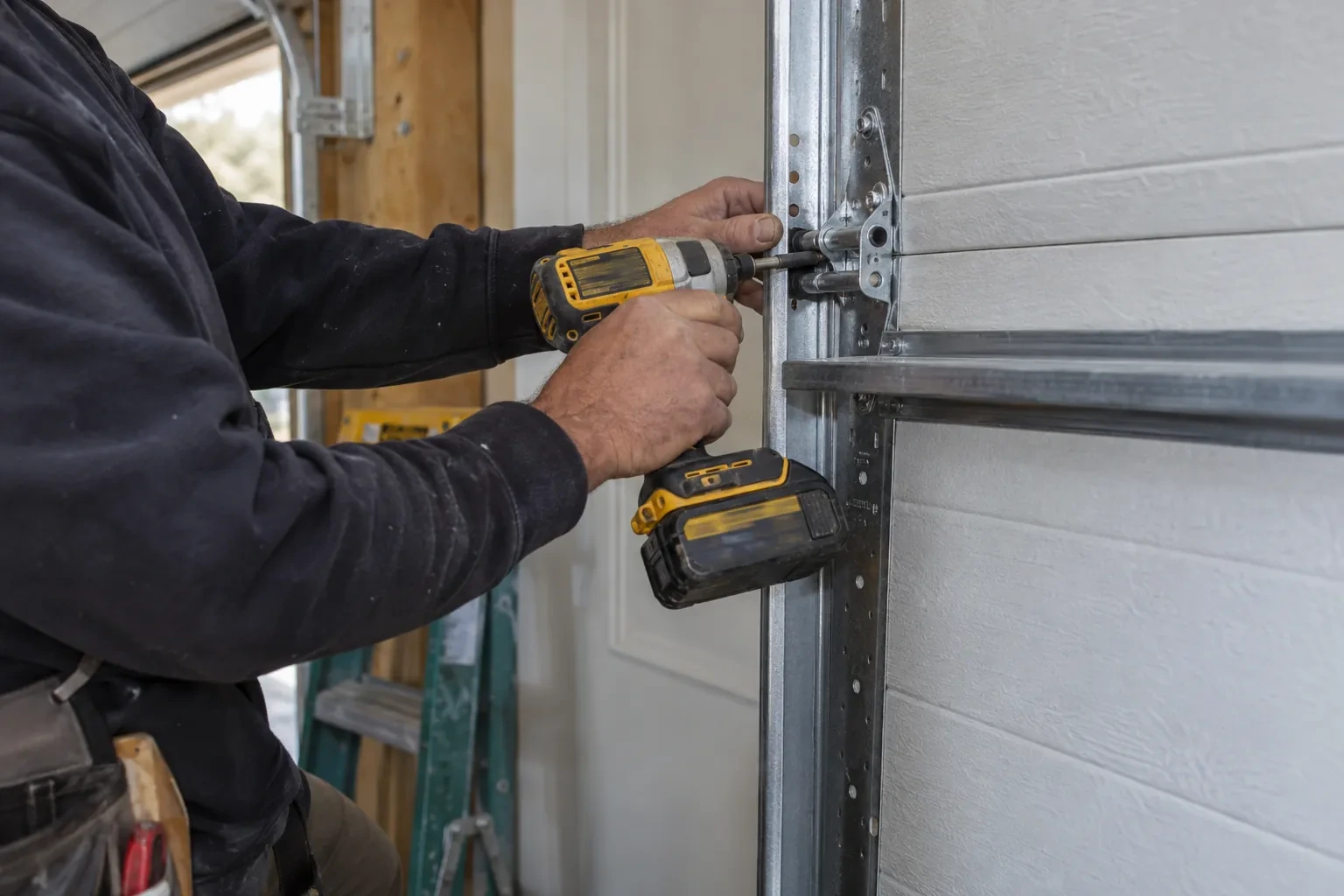
A track visit follows a set order. The opener is disconnected and the door clamped so it cannot move while hardware is loose. Then the whole path is checked: plumb and spacing of each vertical run, the state of the jamb wood and lag screws, the curve, the level of the horizontal run and the hangers holding it, and each roller's seat in the channel. Damaged pieces are dressed or replaced, brackets and hangers are refixed into solid framing, and the two sides are set square to each other. Rollers are reseated, spring tension is returned, and the door is run by hand, balanced, and the opener tested.
Sound familiar?London
Garage Door Track Repair or Replacement · London
Scene 1
Overhead, the horizontal tracks should be level with each other, or set to the same pitch, held from the ceiling by back hangs of perforated angle screwed into joists. The technician sights along each run for sag, twist or a spread channel, checks the stiffening angle riveted to the track is intact, and puts weight on each hanger to check for flex. A run that droops at the rear slopes the wrong way rather than level or its intended pitch; one knocked sideways by a ladder or stored goods twists the top section as it travels. A door drifting back toward the opening once raised points to balance instead. Any hanger anchored into drywall alone is flagged for a joist.
Scene 2
When worn rollers have pried the lip of the track open, the channel is squeezed back to its original width along the affected length. The technician measures the opening against an undamaged stretch, then closes it in stages with track pliers or a clamp and block, checking with a roller after each pass. The lip is dressed so no burr remains to nick the wheel. Because the spread came from rollers dragging on one edge, the wheels that did it are replaced in the same visit, otherwise the new profile opens again within a season. The corrected length is then re-fixed to its bracket so the shape holds.
Scene 3
A well-set track stays that way, but doors live busy lives, and a few early signals mean an easy adjustment instead of a stuck door. A new rub mark on the weatherstrip, a roller that squeaks at the same point each trip, a door that starts to lean or that closes with a gap at one corner, a bracket with a shadow behind it, or a horizontal run that looks a shade lower than its partner: any of these is the track beginning to move. Mention what you saw and where, and the technician can usually put it right in a short visit. Catching it early also spares the rollers and hinges the wear a misaligned track hands them.
What shapes the quoteBroughdale Garage Door Specialists
FeesSame any hour
Then the assessment covers both. A bumper that creases the track usually dents or bows the bottom section, and can bend the bottom bracket, the roller stem and a hinge. The technician follows the impact through those parts, straightens or replaces the track, and explains separately what the section and its hardware need, whether that is a strut, a bracket, or a replacement panel. The door is only put back to work once the whole path is sound.
It is galvanized steel folded into a channel that the roller wheels ride in. Residential doors almost always use two-inch track, with three-inch reserved for heavier or wider doors. The curved piece comes in a radius, commonly 12 or 15 inches, that sets how much headroom the door uses. Replacement pieces are ordered to the same profile, gauge and radius as the rest of the set.
A track is under load from the door resting in it and, at the top, from the spring shaft on the flag bracket, so working on it means securing the door and sometimes unloading the springs first. Freehand hammering also tends to push a dent into a ripple that a roller feels even more. The technician clamps the door, shapes the steel in small steps with a block or track pliers, and gauges the result with a roller.
MiddlesexOntario
Garage Door Track Repair or Replacement · Lucan Biddulph, Middlesex Centre, Broughdale, Calamity Corners, Masonville, Orchard Park, Sherwood Forest, Stoneybrook, University Heights, White Hills, Northcrest
Every square is one home in a hundred.
On-site assessment
You bought the house with a door that sticks near the top of its travel.
(226) 781-8703, open 24/7.
On-site assessment preferred · (226) 781-8703, open 24/7