Skip to content
BroughdaleGarage Door SpecialistsOpen 24/7 (226) 781-8703
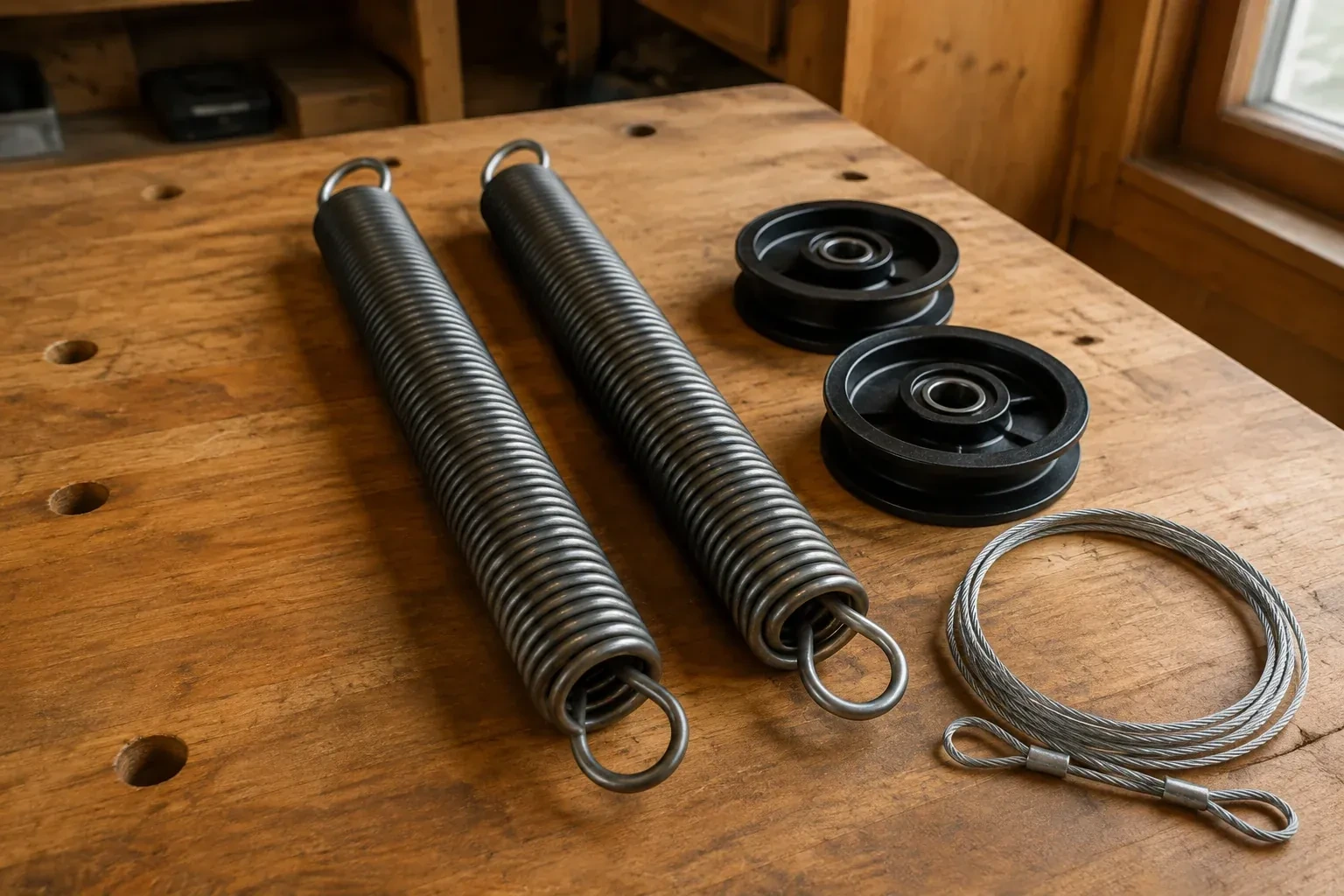
Two coiled extension springs with looped ends, two black pulleys and a loop of steel cable on a worn wooden workbench. — Extension Spring Replacement, London

Springs · London

Extension Spring Replacement

You pulled the red cord to open the door during a power cut and it barely moved. Lifting it took your whole weight, and when you let go it came down hard.

In plain words

A spring visit follows a fixed order, so you know what to expect. The technician releases the opener, raises the door fully and clamps it, because an extension spring is at its slackest with the door open. Then both springs, the pulleys, cables, hangers and containment cables are inspected and the door is weighed. Old springs come off, new ones go on with containment cables threaded through, cables are routed over the pulleys and both sides are hooked at the same setting. The clamps come off, the door is balanced by hand, and only then is the opener reconnected, adjusted and put through its reversal tests.

Sound familiar?London

The call
The door climbs with the left corner ahead of the right, then twists as it turns into the ceiling track. Looking up, the spring on the right side is stretched longer than its partner, with daylight showing between the coils.
NextHow the visit goes

Extension Spring Replacement · London

How the visit goes

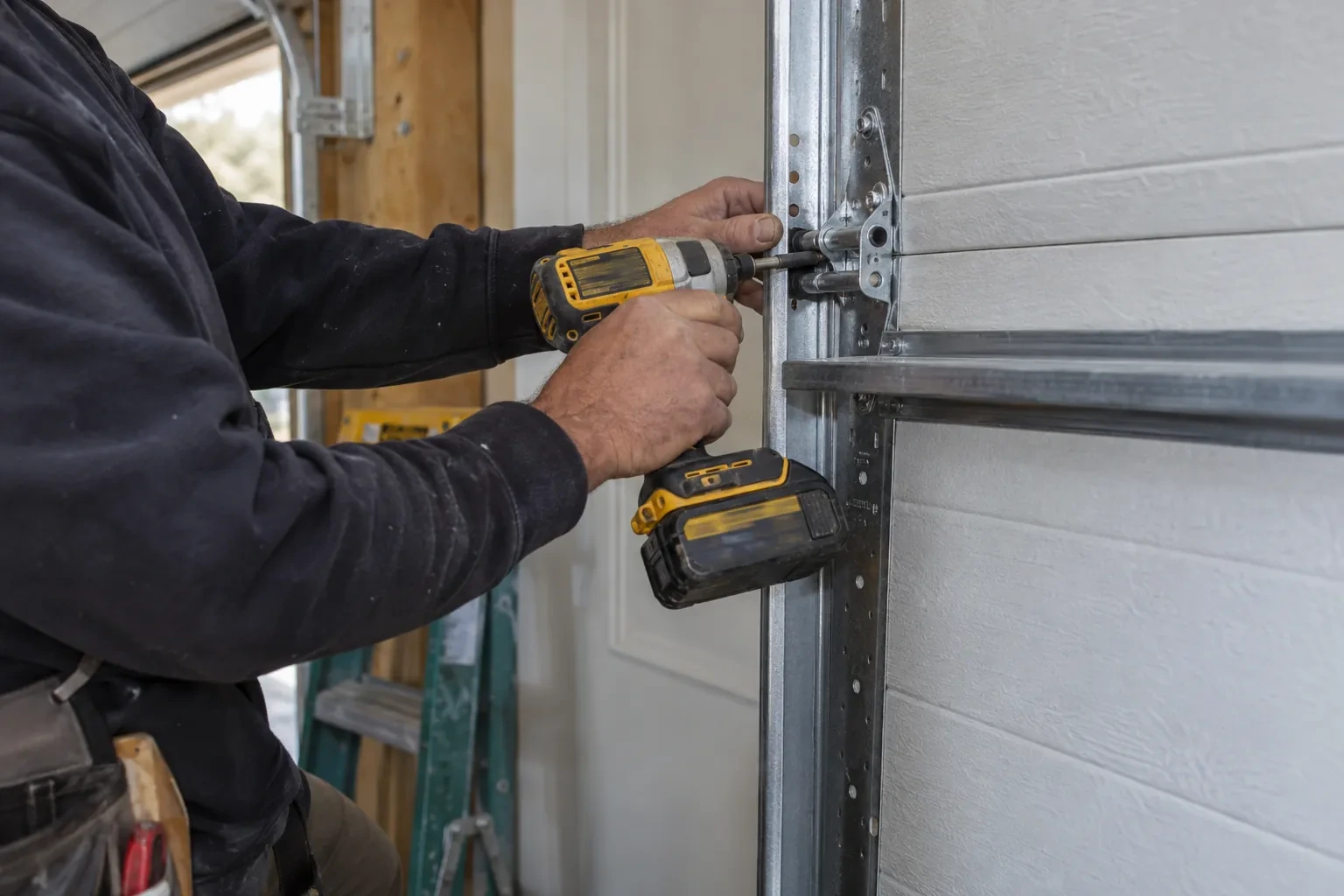
Hands driving a screw with a yellow cordless impact driver into a perforated steel track beside a white garage door panel.
  1. Scene 1

    Both springs, side by side

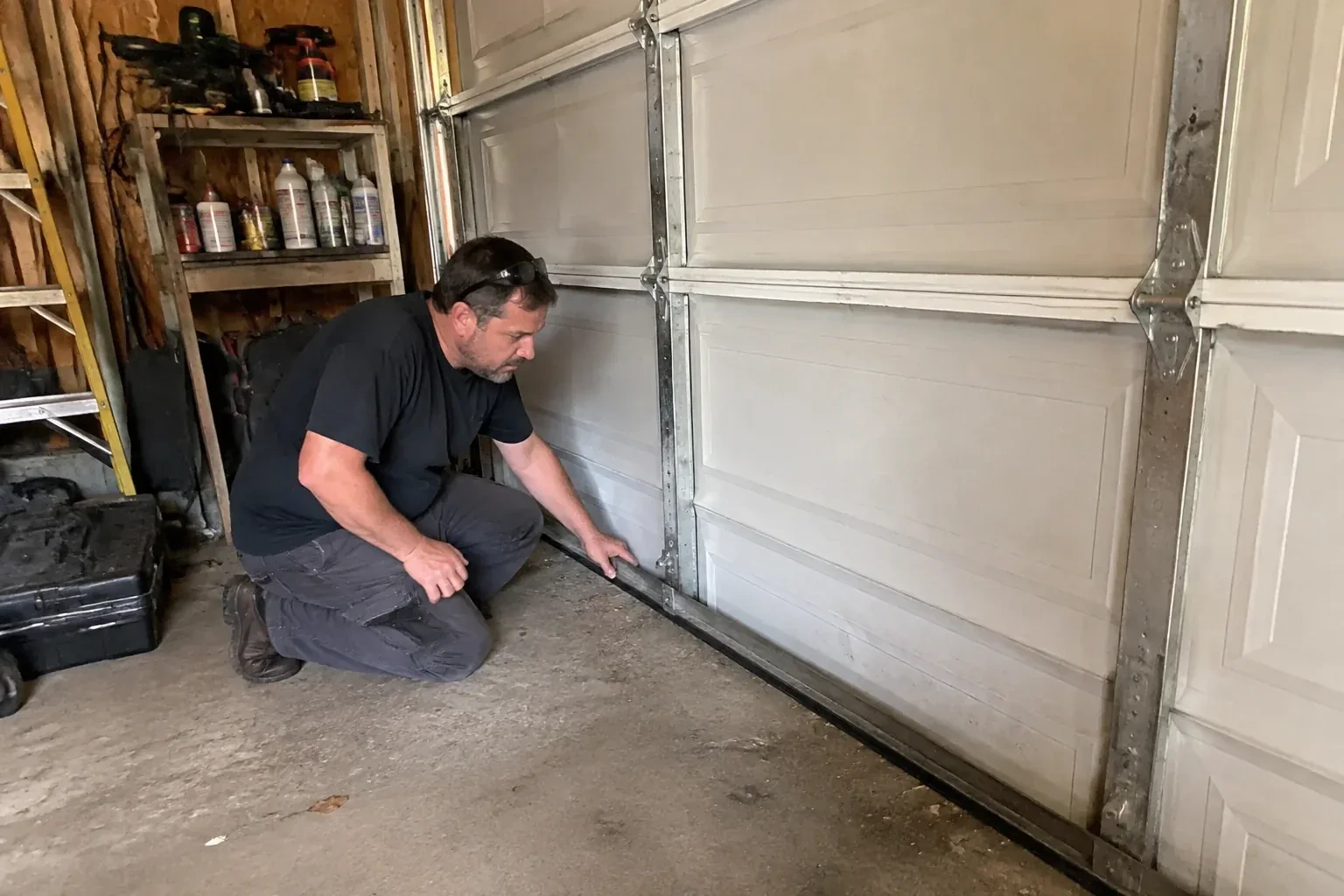
    Even when only one spring has snapped, both are read closely. The technician looks for gaps opening between coils with the door up, which means the wire has stretched and lost its pull; rust pitting and scale, especially where the spring sits nearest the back wall; a spring hanging visibly longer or lower than its partner; and end loops that have opened or cracked. The two are compared for length, coil diameter and wire size, because springs of different ratings are sometimes found on the same door after a past repair. Whatever is found, the outcome is the same, a new matched pair, but the reading tells the technician what rating the door really needs.

  2. Scene 2

    Taking the old springs down

    With the door open and clamped, each old spring is nearly slack, and removal is straightforward. The technician unhooks the lift cable from its S-hook or clip at the front, which lets the spring's pulley end drop free, then lifts the rear loop off the hanger. The old containment cable is unclipped from its anchors and pulled out of the coil. On a door with a broken spring, the two halves are gathered and the containment cable, if there was one, is inspected for the marks of having done its job. Everything that comes down is laid out on the floor so the old spring can be measured against its replacement and you can see the wear.

  3. Scene 3

    A monthly look along the springs

    Extension springs are easy to inspect because they hang in plain view. Once a month, with the door fully closed so the springs are stretched, stand inside and look along each one from the back hanger to the pulley. The coils should be evenly spaced along the whole length; a section stretched wider than the rest is a spring losing its temper. Then raise the door and look again: with the door open the coils should close up tight, and both springs should hang at the same height. Rust bloom, a pulley that sits crooked, a cable off its groove or a containment cable hanging loose are all worth a call while they are still small.

In the van

  • Bottom brackets and clevis pins
  • Lift cables
  • Track clamps or locking pliers
  • Rear spring hangers and angle iron
  • S-hooks and adjusting clips

What shapes the quoteBroughdale Garage Door Specialists

Containment cables to add
A door that never had containment cables gets them with the new springs, along with anchor hardware into the framing. It is a small parts line and a worthwhile one.
Hangers and anchor points
A rear hanger that has loosened, a front bracket bent by a jumped cable, or framing that needs a new anchor point adds fasteners, angle iron and a little time.
Opener adjustment and testing
Resetting the opener's force and travel to the newly balanced door and running the reversal tests is a short task that the quote names when it applies.

FeesSame any hour

Have it ready

Before you call · 0 / 3

(226) 781-8703

Homeowners ask

My springs squeak and twang. Is that normal?

Some noise is ordinary. Extension springs stretch and relax on every trip, and a dry coil or a pulley with a dry axle will squeak, especially in cold weather; a light spray of lubricant along the springs and a drop on each pulley usually quiets it. A sharper twang, or a new grinding from a pulley, is worth a look, since a stiff pulley loads the spring and wears the cable.

How do you know which springs my door needs?

By weight. Extension springs are rated for the weight they lift, so the technician releases the opener and weighs the door on a scale, then matches that figure and the door's height to a spring rating and stretch length. The old springs are measured as a check on wire size, coil diameter and length. Where the two disagree, the scale decides, since doors gain weight from added insulation or panels.

What happens during the visit?

The technician releases the opener, opens the door fully and clamps it so the springs go slack, then inspects springs, pulleys, cables, hangers and containment cables and weighs the door. The old springs come off, a matched pair goes on with containment cables through them, the lift cables are routed over the pulleys and the two sides are set to matching hook positions. The door is balanced by hand, the opener reconnected and its reversing tested with you watching.

Londoninformation

MiddlesexOntario

Town
London, Middlesex
In business
31 years
Hours
Open 24/7
Nights, weekends and holidays, same fees
Visits
On-site assessment preferred. Request a visit or call.

2021 census: what it means at the door

Every square is one home in a hundred.

  • 52 in 100 homes · older homes
  • About 52% of homes in London were built in 1980 or earlier, according to the 2021 Census.Original openers in older neighbourhoods often predate photo-eye sensors and rolling-code remotes. Bringing one up to date means a quieter motor, sensors that stop the door for a child or pet, and remotes that cannot be copied from the driveway, all installed in a single visit.
  • Single-detached houses make up about 49% of homes in London (2021 Census).In mixed neighbourhoods, noise matters differently from one address to the next. A detached house with a bedroom above the garage and a townhouse with a neighbour through the wall both benefit from a belt-drive opener and nylon rollers, and we explain the difference either way.

Source: Statistics Canada, Census Profile

Open London in Google Maps

On-site assessment

Request a visit.

You pulled the red cord to open the door during a power cut and it barely moved.

(226) 781-8703, open 24/7.