Skip to content
BroughdaleGarage Door SpecialistsOpen 24/7 (226) 781-8703
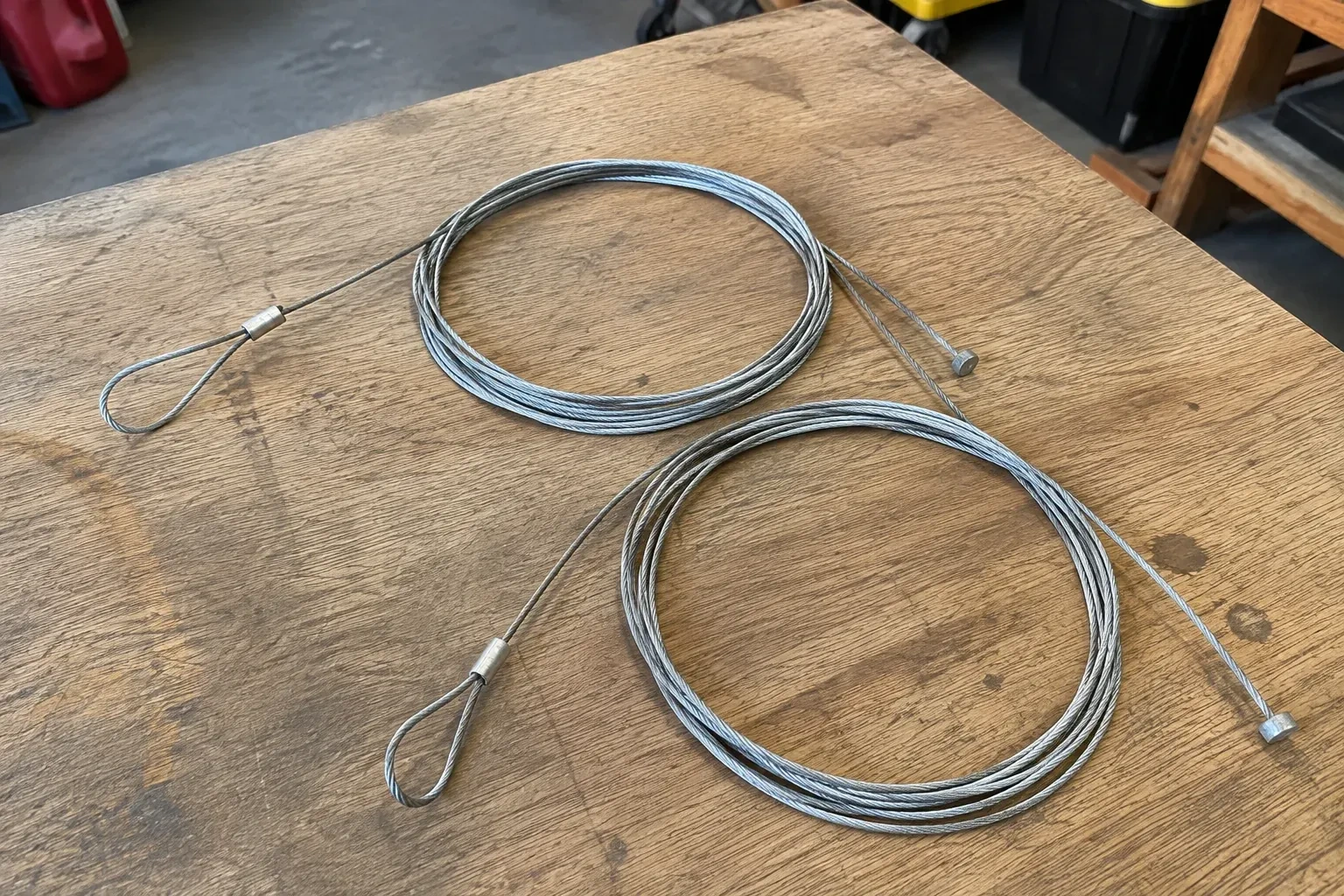
Two coiled steel cables with loop and stop ends on a workbench. — Garage Door Cable Replacement, London

Springs · London

Garage Door Cable Replacement

There was a sharp crack from the garage, and when you went to look the door had dropped on one side and jammed. A length of cable lies coiled on the floor by the bottom roller.

In plain words

Which counterbalance your door has shapes the job. Torsion doors carry a spring on a shaft above the opening, and the cables wind onto grooved drums at each end; the technician winds the spring down with steel bars, swaps the cables, sets the drums and winds it back up. Extension doors, common on older detached garages, run the cables over pulleys beside the horizontal tracks with a spring stretched behind each; here the door is opened and clamped so the springs relax, then the cable is threaded, adjusted at its clip and checked against its containment cable. Either way, the service ends with a balanced door.

Sound familiar?London

The call
After years of slushy winters the cables look thinner near the bottom brackets, with rust streaks running down the door where they attach. The door still works, but the frayed wires catch your glove when you brush past.
NextHow the visit goes

Garage Door Cable Replacement · London

How the visit goes

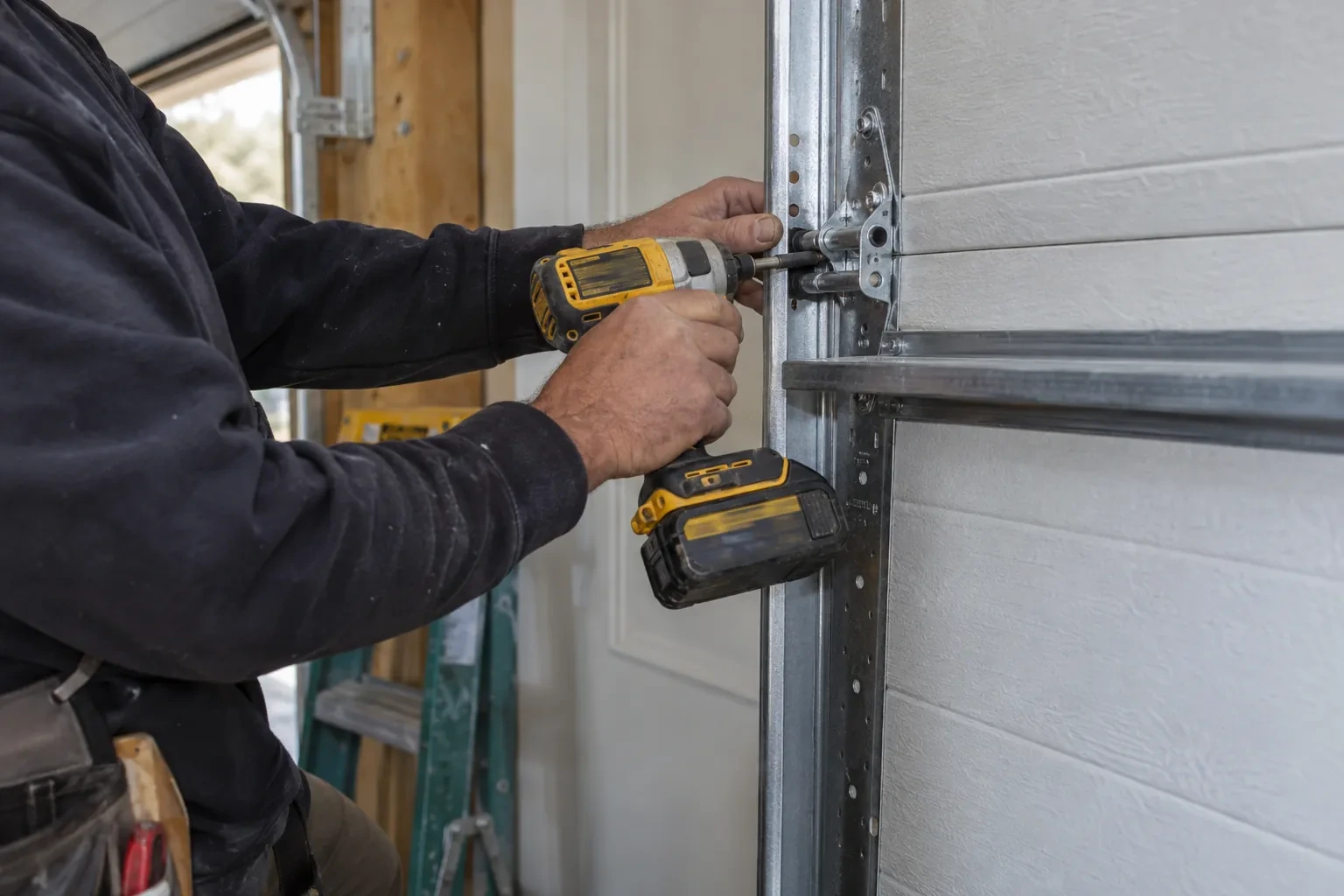
Hands driving a screw with a yellow cordless impact driver into a perforated steel track beside a white garage door panel.
  1. Scene 1

    The drums and their set screws

    On a torsion door the cable drum is where most trouble starts or shows. The technician checks that each drum is tight on the shaft and that its set screws have not loosened and let it creep, which shortens the effective cable on that side. The groove is inspected for wear ridges, cracks and burrs that would chew through a new cable, and the slot that holds the cable stop is checked for damage. Where the old cable jumped its groove, the drum is examined for the mark it left and for whether the drum or an obstruction under the door was the cause. A worn drum is replaced with its mate.

  2. Scene 2

    Extension-spring doors: pulleys, clips and containment

    On a door with springs along the tracks, the new cable is threaded from the bottom bracket up over the pulley at the front of the horizontal track, back to the pulley on the end of the spring, and forward to the adjusting clip on the track hanger. The technician replaces a pulley whose wheel is grooved or whose bearing has seized, since that is often what wore the cable, and checks the S-hooks and sheave forks. Each side is set to the same clip position so the door hangs level. A containment cable is confirmed through the centre of each spring and added if the door was never fitted with one.

  3. Scene 3

    Lubrication that helps, and where it does not belong

    A few minutes with a can of garage-door lubricant twice a year keeps the whole system easy on the new cables. Spray the torsion spring lightly along its length, the hinge pins, the roller stems and bearings, and the bottom bracket pins, then run the door a few times to spread it. A light mist on the cables themselves slows rust; heavy grease is avoided because it holds grit and moisture. The tracks are left dry and simply wiped clean, since lubricant there collects dirt and lets rollers slide instead of roll. Silicone or a lithium spray made for doors is the right product.

In the van

  • Track clamps or locking pliers
  • Clevis pins and cotter pins
  • Cable drums, matched pair
  • Containment cables
  • Bottom brackets with cable pin

What shapes the quoteBroughdale Garage Door Specialists

Worn rollers and hinges found on the way
Cracked roller wheels or split hinges seen during the inspection are pointed out and offered as optional items, since replacing them while the door is unloaded is efficient.
Condition of the bottom brackets
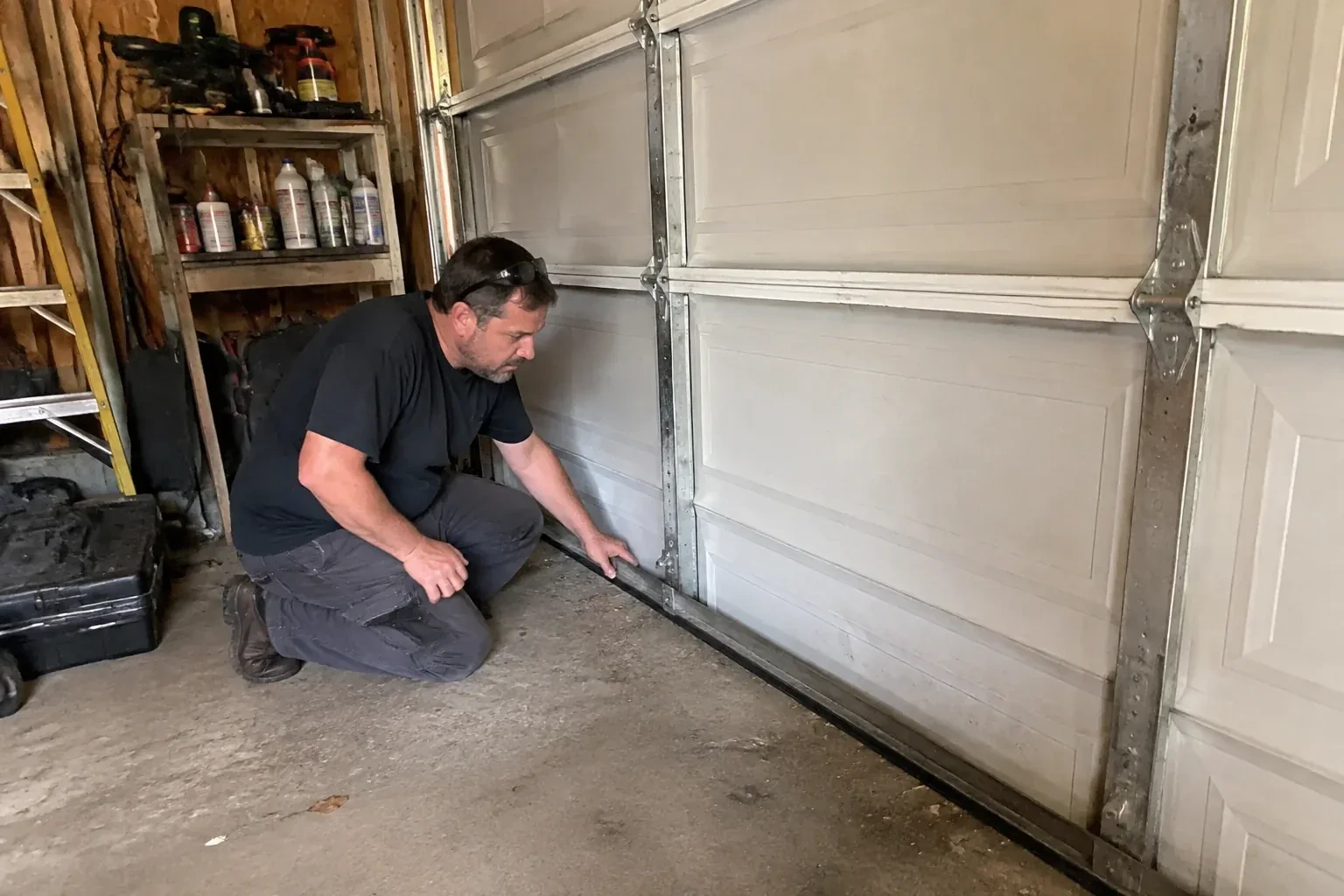
A bracket bent by a bumper or corroded by years of salt is replaced while the system is unloaded. New brackets, roller and fasteners are listed as their own line.
One cable or the pair
Cables are normally renewed together, and the quote reflects two cables and the work of setting both sides level. Where one side was recently replaced, that is discussed on site.

FeesSame any hour

Have it ready

Before you call · 0 / 3

(226) 781-8703

Homeowners ask

What is the cable drum, and when does it need replacing too?

The drum is the grooved wheel on each end of the torsion shaft that the cable winds onto as the door opens. Its grooves guide the cable in a single layer and its shape sets how the door is balanced through its travel. A drum is replaced when the grooves are worn or cracked, the cable slot is damaged, or it has spun on the shaft and scored it. Drums are changed in pairs.

Can a cable be too long or too short for the door?

Yes, and both cause trouble. A cable that is too long runs out of drum groove and starts a second layer over the first, which wears it and throws the balance off near the top of travel. A cable that is too short leaves the door hanging out of level or the drum without a secure wrap. The correct length comes from the door height, the drum and the lift type, so the technician measures rather than guesses.

What happens during the visit?

The opener is disconnected and the door clamped. The technician identifies the counterbalance type, inspects both cables, the drums, brackets, rollers, track and springs, and explains what is found. The springs are unloaded, the old cables removed, new ones fitted and set so the door is level, and the springs wound back. The door is then balanced by hand, the opener reconnected and its safety features tested while you watch.

Londoninformation

MiddlesexOntario

Town
London, Middlesex
In business
31 years
Hours
Open 24/7
Nights, weekends and holidays, same fees
Visits
On-site assessment preferred. Request a visit or call.

2021 census: what it means at the door

Every square is one home in a hundred.

  • 52 in 100 homes · older homes
  • About 52% of homes in London were built in 1980 or earlier, according to the 2021 Census.Original openers in older neighbourhoods often predate photo-eye sensors and rolling-code remotes. Bringing one up to date means a quieter motor, sensors that stop the door for a child or pet, and remotes that cannot be copied from the driveway, all installed in a single visit.
  • Single-detached houses make up about 49% of homes in London (2021 Census).In mixed neighbourhoods, noise matters differently from one address to the next. A detached house with a bedroom above the garage and a townhouse with a neighbour through the wall both benefit from a belt-drive opener and nylon rollers, and we explain the difference either way.

Source: Statistics Canada, Census Profile

Open London in Google Maps

On-site assessment

Request a visit.

There was a sharp crack from the garage, and when you went to look the door had dropped on one side and jammed.

(226) 781-8703, open 24/7.