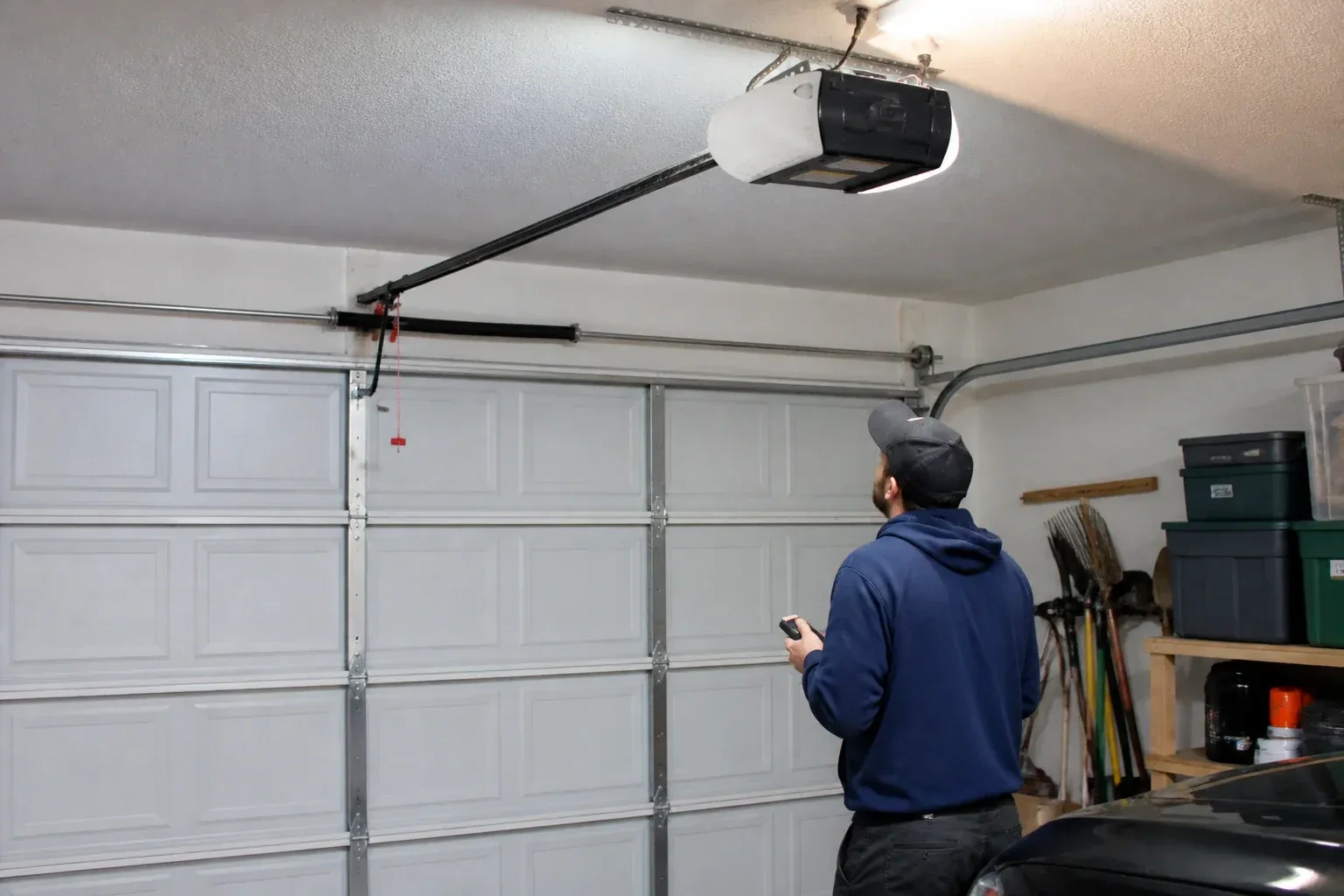
Sound familiar?Calamity Corners
- The call
- The small light on one of the sensors near the floor has gone dark, or it flickers when someone walks past the track. The other one glows steadily. The door refuses to close from the car.
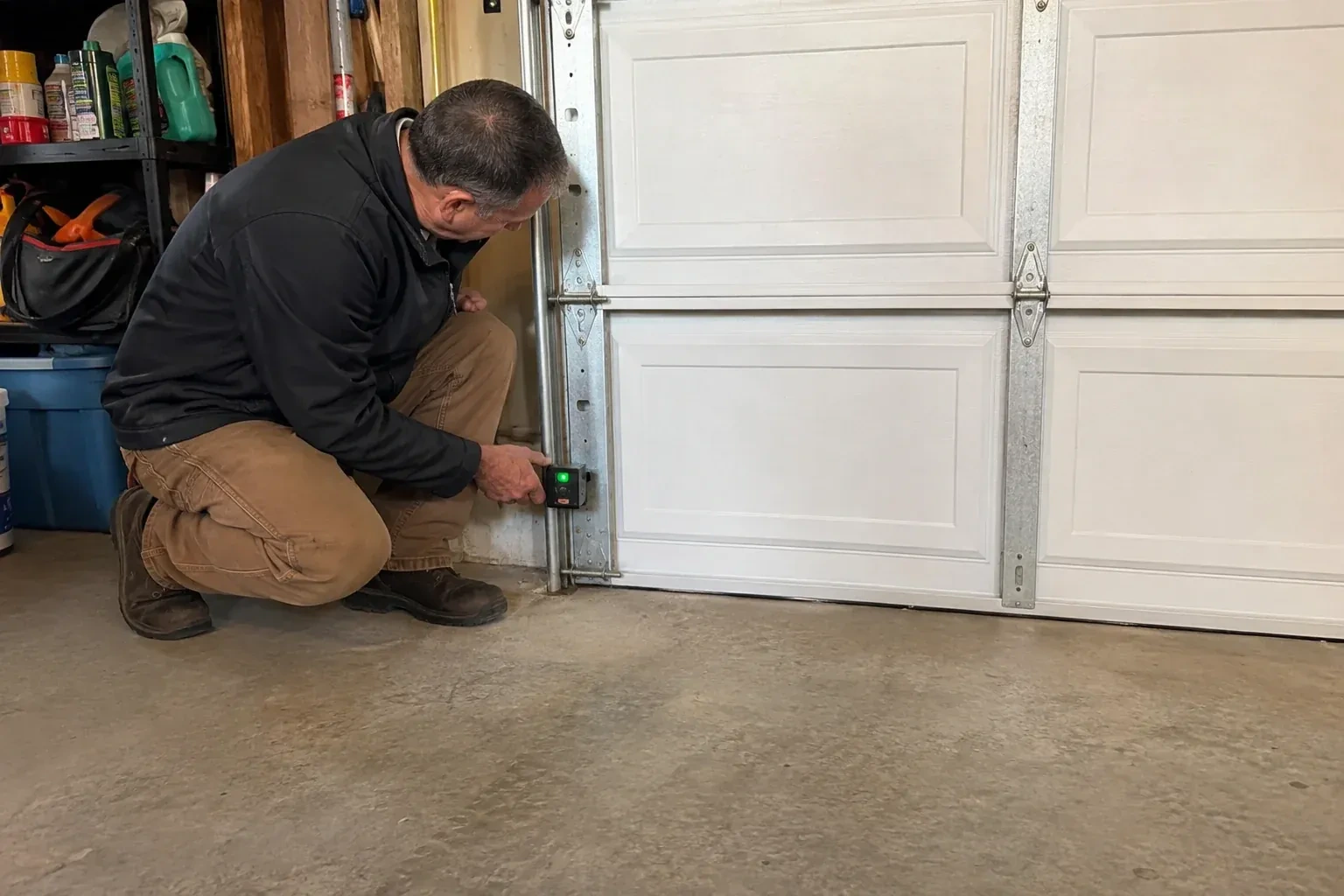
The door will only go down while a finger stays on the wall button; let go and it stops or reverses. From the remote it opens fine but never closes, so someone has to stand in the garage every time.
Most sensor visits end in alignment rather than new parts. The brackets that hold the sensors ride on the door track or the wall, and they get bumped by bins, tires and shovels until the two lenses no longer look at each other. The technician resets both sensors to the same height, loosens the wing nuts, aims the pair until the receiving light holds steady, tightens everything and secures the wire. Replacement is the answer when a lens is crazed, a housing is cracked, water has got inside or the indicator stays dark with good wiring, and then a pair matched to the opener is fitted.
Sound familiar?Calamity Corners
Photo-Eye Sensor Alignment or Replacement · Calamity Corners
Scene 1
A sensor that misbehaves on a timetable is usually being blinded rather than broken. The technician notes which way the door faces, where the low sun reaches the floor in the morning and late afternoon, and whether a receiving lens looks into that light or into a reflection off a parked car, a white wall or fresh snow. Lenses are checked for frost, condensation and a film of salt, common in an unheated garage. A hand cupped over the receiving eye while the light is watched is a simple test: if the indicator settles when the eye is shaded, the fix is a side swap or a small hood rather than new parts.
Scene 2
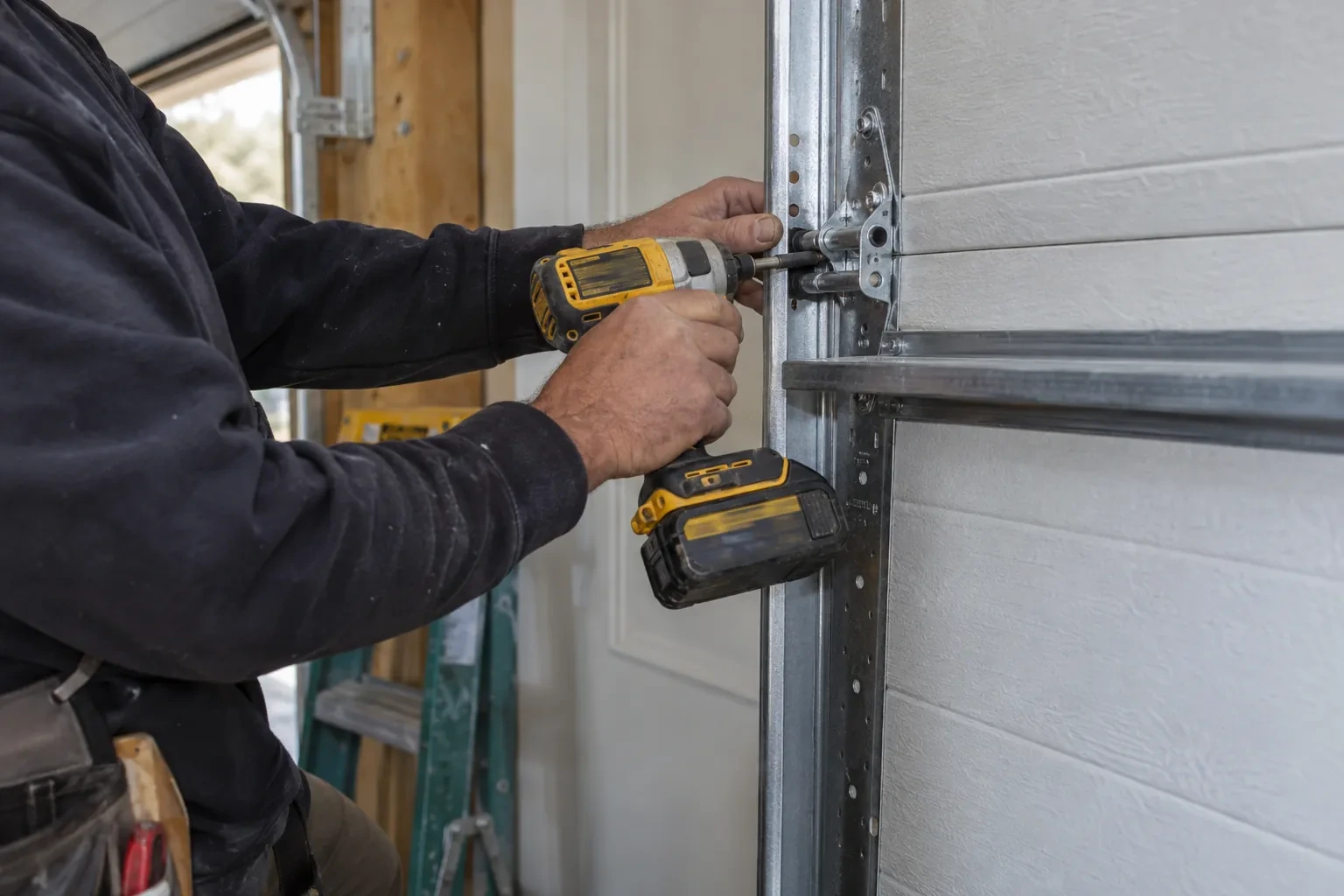
Sometimes the sensors exist but have been defeated: taped face to face next to the head unit so the circuit is always satisfied and the door closes on anything. The technician separates the pair, checks that both still work, and mounts them where they belong on each side of the opening, low to the floor and facing each other. New wire is run down each side, brackets are fitted, and the alignment is set. The opener is then made to prove itself with the beam test, and the household is shown why the pair matters and how to keep it working, so the shortcut is never tempting again.
Scene 3
The habit worth keeping takes about a minute. Once a month, with the door open, press close on the wall control and, as it moves down, pass a broom handle through the beam near the floor. The door should stop and climb back to fully open. Then lay a 2x4 flat under the middle of the door and close onto it; the door should touch it and reverse. If either test fails, stop using the opener; close the door first if it is not already closed, then use the manual release, and get help moving it by hand if it feels heavy or will not hold. A door that passes both tests is doing its job.
What shapes the quoteBroughdale Garage Door Specialists
FeesSame any hour
It helps. The technician needs access to the garage and the head unit, and the visit ends with a demonstration of the sensor lights and the two tests so you know what normal looks like. If you cannot be there, an adult who can open the garage is enough, and the written note left afterwards records what was found and changed. Having the strip of floor beside the door clear before arrival saves time either way.
Alignment, cleaning and a bracket adjustment are done inside an hour on most doors, including the two tests at the end. Replacing the pair adds a little for wiring and setup. Re-running the wire all the way from the motor to both sensors is the part that stretches a visit, especially where the wire is behind a finished ceiling or the garage is full. Having the floor by the door clear before arrival helps.
Yes. The sensors are wired to the head unit, and the app or hub simply talks to that unit, so nothing about the connection changes. What you will notice is the fault code clearing: apps that reported the sensors as obstructed or not aligned show the door as ready to close again. If an app or hub still holds an old code after the work, refreshing it or cycling the door from the app once clears it.
MiddlesexOntario
Photo-Eye Sensor Alignment or Replacement · London, Lucan Biddulph, Middlesex Centre, Broughdale, Masonville, Orchard Park, Sherwood Forest, Stoneybrook, University Heights, White Hills, Northcrest
Every square is one home in a hundred.
On-site assessment
The door will only go down while a finger stays on the wall button; let go and it stops or reverses.
(226) 781-8703, open 24/7.
On-site assessment preferred · (226) 781-8703, open 24/7