Sound familiar?Stoneybrook
- The call
- On bright afternoons the door goes down a metre, stops, and climbs back up while the light on the opener blinks. After dark it closes perfectly. Nothing has changed except the weather.
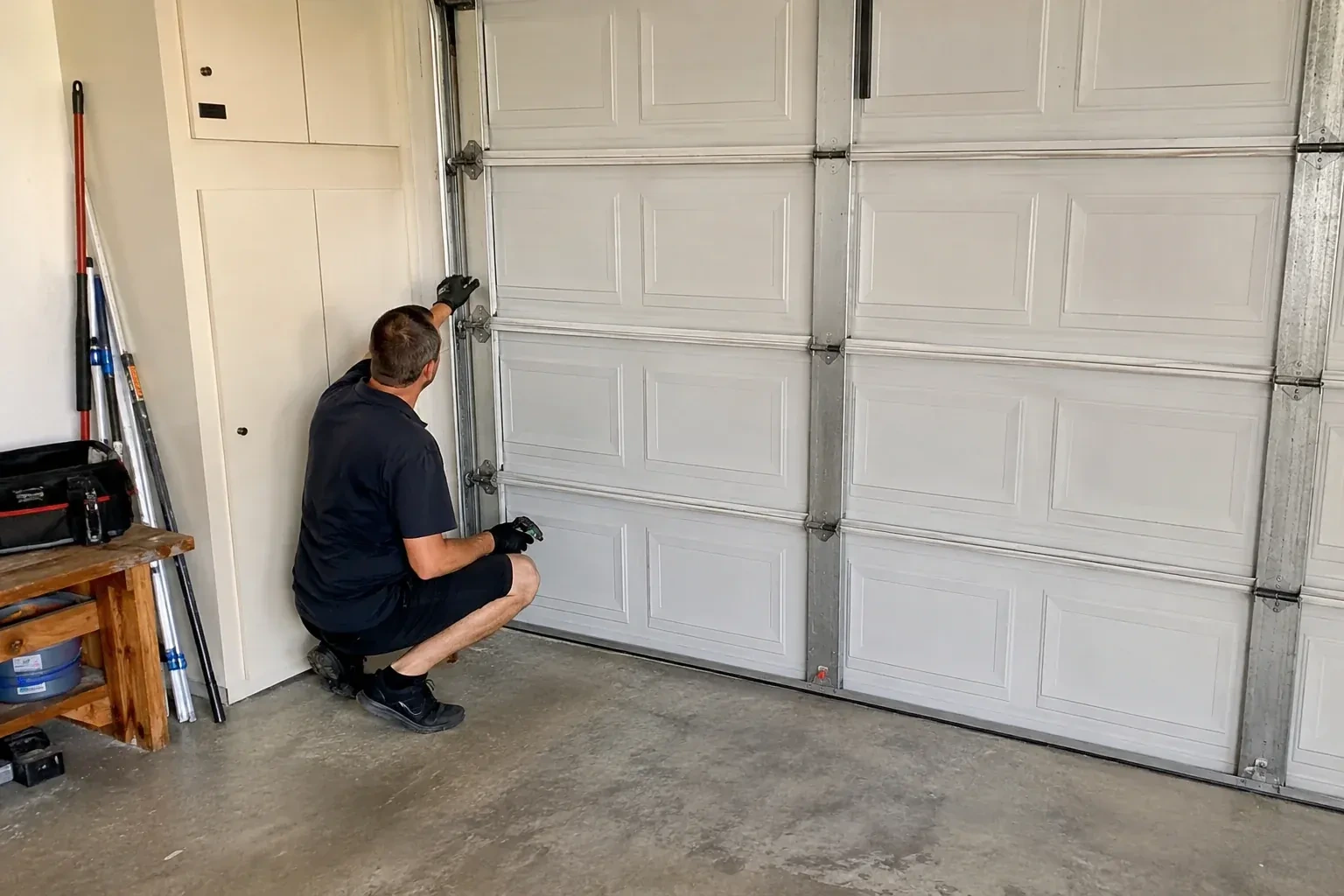
Three tests sit at the heart of the visit. The balance test, done with the opener disconnected, shows whether the springs are still carrying the door's weight or the motor is straining to do it. The contact-reversal test, a flat board laid on the floor, shows whether the door backs off when it meets something solid. The photo-eye test, breaking the beam while the door closes, shows whether the sensors stop it before contact. Each one takes a minute, each answers a different question, and together they tell you the door is doing what it was built to do.
Sound familiar?Stoneybrook
Garage Door Safety Inspection · Stoneybrook
Scene 1
You are part of the assessment. The technician asks when the door last felt normal, what the first change was, whether a sound comes on the way up or the way down, and whether anything happened just before: a bump from the car, a heavy snowfall, a power cut, a new remote. A door that got noisy over a year and a door that changed overnight are different stories, and the second usually has a single cause. Previous repair paperwork, the door's manual and any photos from when the house was bought are all useful. This short conversation tends to shorten the search and adds context to the report that a checklist alone would miss.
Scene 2
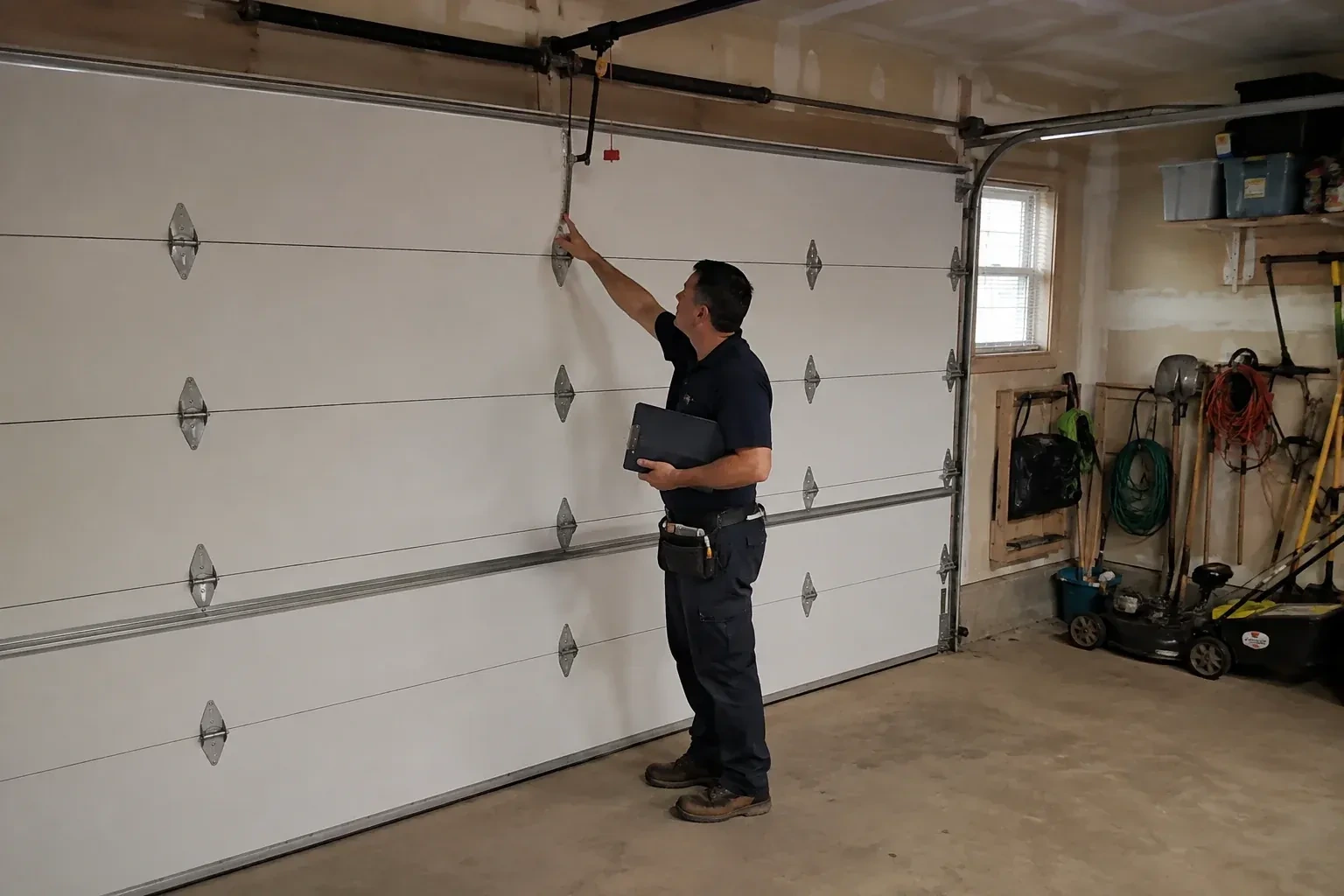
Each way of operating the door is tried in turn: the wall control, every remote the household uses, the keypad if there is one, and the lock or vacation button that disables the remotes. The technician checks that the wall control is mounted out of a small child's reach and within sight of the door, that batteries are fresh, and that the manual release cord hangs within reach with its handle intact and releases and re-engages the trolley cleanly. Any manual slide lock on the door is checked to make sure it is disengaged, since a door locked by hand while the opener is connected is a common cause of a bent rail.
Scene 3
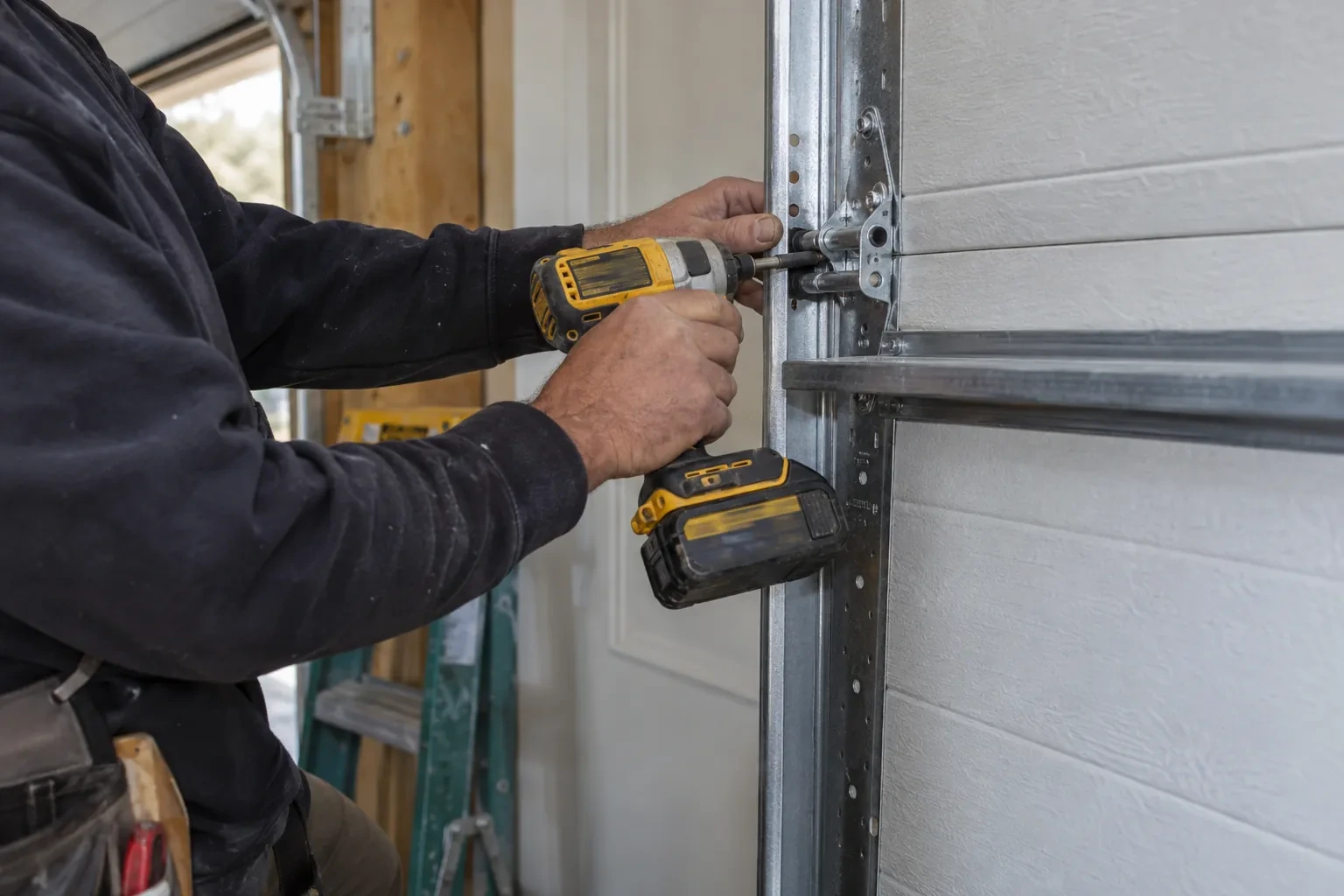
If the report lists planned repairs, it also suggests an order, because some items lean on others. A cable showing rust at the loop comes before a new roller set, since cables are changed with the counterbalance unloaded and rollers are a simple job at any time. Springs near the end of their cycle life are planned as a pair, with the cables checked in the same visit. Photo-eye alignment and a stripped bracket fastener are done first because they are small and they matter. You can take the list in one go or over a few months; either way, nothing in it is a surprise when the technician returns.
What shapes the quoteBroughdale Garage Door Specialists
FeesSame any hour
Yes, plainly and at the door. A slack or frayed cable, a gap in a spring coil, a door hanging crooked, a bracket pulling out of the framing or an opener that fails the reversal test are the kinds of findings that put an item in the stop-use group. When that happens you see the reason yourself, the door is left resting in a safe spot with the opener unhooked, and the fix is written up and quoted so it can be booked.
No, and that is deliberate. An inspection reads the counterbalance: the technician checks the coil, measures wire size and length, and watches how the door behaves by hand. If it is out of step with the door's weight, the report says so and by how much. Winding a spring is its own appointment, done once the door is clamped and the system is calm, which keeps the inspection record honest about the door as found.
Plan for roughly an hour for a single door in ordinary condition, and longer for a double door, a second door on the property, or a door with a history that needs following up. Maintenance done on the spot adds a few minutes. A post-impact assessment, where the technician traces the force through the hardware, takes longer than a routine check. You are told at the door if the scope is growing.
MiddlesexOntario
Garage Door Safety Inspection · London, Lucan Biddulph, Middlesex Centre, Broughdale, Calamity Corners, Masonville, Orchard Park, Sherwood Forest, University Heights, White Hills, Northcrest
Every square is one home in a hundred.
On-site assessment
A tenant mentioned the door is louder than it used to be.
(226) 781-8703, open 24/7.
On-site assessment preferred · (226) 781-8703, open 24/7